



How Brush Design and Technology Increase Performance
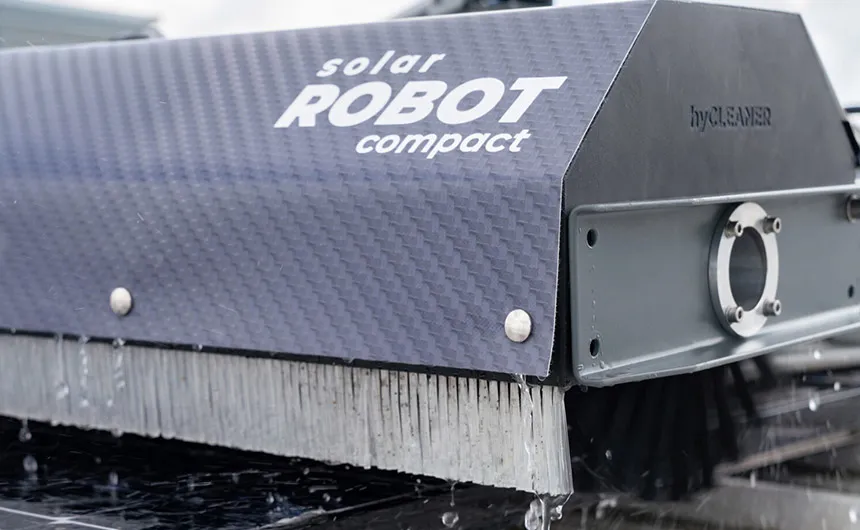
Precisely coordinated cleaning brushes are crucial for cleaning photovoltaic modules. They ensure high performance with minimal wear and protect the module surface. Modern cleaning robots utilize brush systems optimally matched in material, diameter, and rotational speed. But are different brush types needed for best results – or even cleaning agents? This article shows which technical parameters are decisive for efficient PV cleaning.
A central factor for the performance of PV cleaning is the rotational speed (rpm – “rounds per minute”), which directly affects the mechanical action. Equally important is the circumferential speed (m/s), as it describes the actual relative movement of the bristles to the module surface.
Excessive circumferential speed can accelerate bristle wear and even cause micro-damage, while insufficient speed significantly reduces cleaning effectiveness. A balanced setting is therefore crucial: lower speeds are preferable for sensitive surfaces or delicate tasks, whereas higher speeds provide more efficiency for robust surfaces.
In practice, 300 rpm for the solarROBOT compact and 400 rpm for the solarROBOT pro have proven ideal for PV cleaning robots, as they ensure both efficiency and gentle cleaning in solar applications.
The bristle material significantly determines the performance of a PV cleaning brush. Commonly used are:
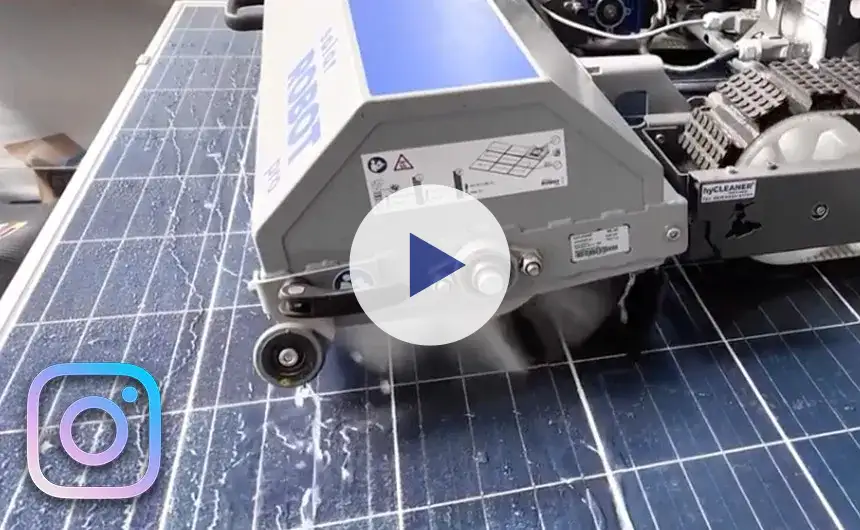
They are used for robust cleaning tasks and heavier soiling.
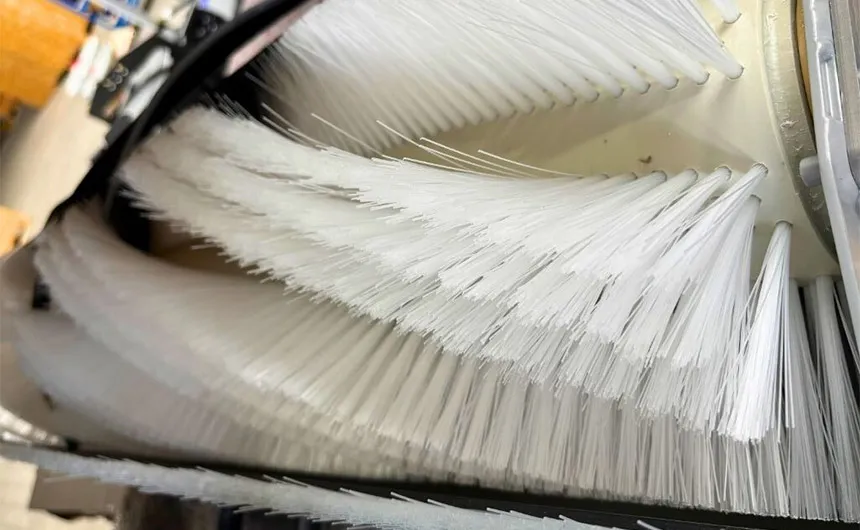
Not only the material itself, but also the arrangement, thickness, and length of the bristles influence cleaning performance.
Dense vs. loose – dense increases the contact surface, loose improves dirt absorption.
Helix/Spiral shape – consistent results, good self-cleaning, prevents dirt accumulation, ideal for uneven or sloped surfaces.
Segmented – targeted dirt removal through higher point load.
Thick and long – different bristle thicknesses allow for a combination of abrasive and gentle cleaning. Homogeneous bristle fields ensure even load distribution and facilitate maintenance.
The optimal photovoltaic cleaning brush combines the appropriate brush diameter, the correct speed, the suitable bristle material, and a well-thought-out arrangement with effective water guidance. Only when all these factors work together harmoniously is efficient, gentle, and sustainable cleaning of solar modules possible.
If you are unsure, you should conduct a PV cleaning brush test before purchasing or seek direct advice from the manufacturer. When buying a cleaning robot, it is worth taking a close look at the installed brush system, as it significantly influences the cleaning results.
Would you like to learn more about the possibilities of a cleaning robot or our cleaning systems? Then please contact us; we would be happy to advise you!