How much does a dirty solar system cost? Example calculations for agriculture, commercial roofs and ground-mounted systems – incl. yield losses and cleaning intervals.



Startseite ❯ Solar-Fachartikel ❯ Expert Knowledge ❯ Solar Panel Cleaning: How Often Is It Really Necessary?
Identifying the right time for cleaning
For operators of commercial and industrial PV systems
How often a solar system should be cleaned depends primarily on the location, degree of soiling, and environmental conditions. For commercial and industrial systems, regular cleaning can be useful to avoid yield losses caused by dust, pollen, bird droppings, or other deposits. Instead of cleaning exclusively according to a fixed schedule, operators should regularly monitor the condition and performance of their system and adjust the cleaning interval accordingly.
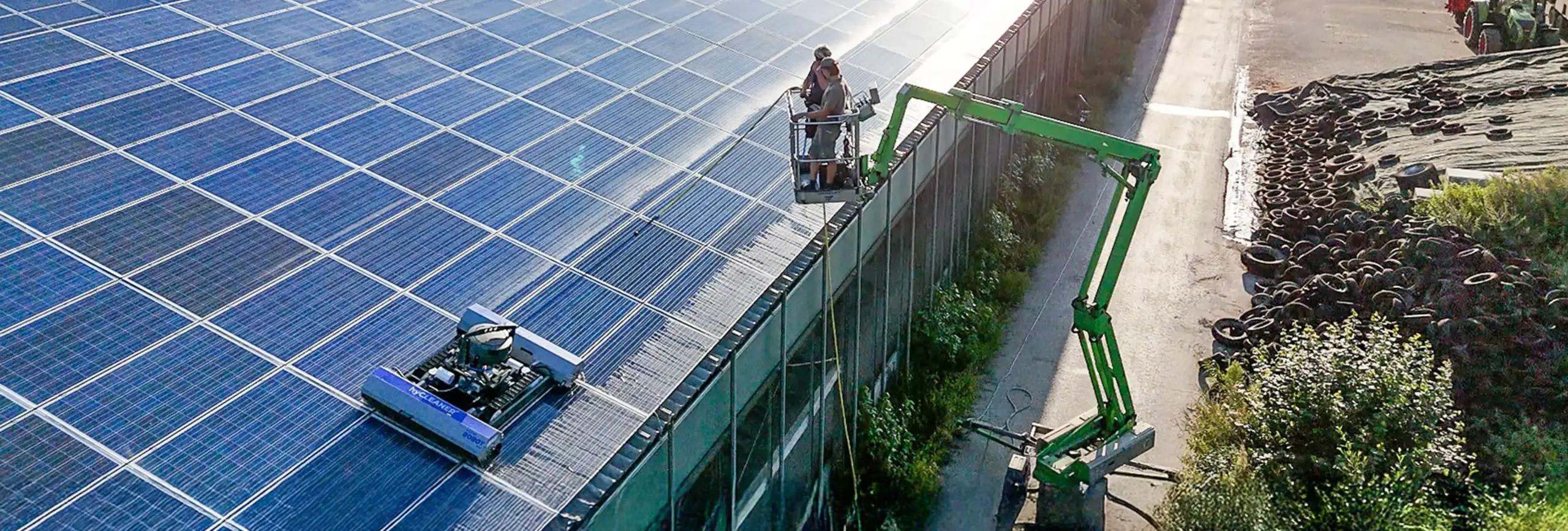
How often a solar system needs to be cleaned cannot be answered universally. Several influencing factors are decisive:
Particularly in agricultural and industrial environments, dirt can accumulate significantly faster, requiring shorter cleaning intervals.
In addition to fixed intervals, there are clear indicators that cleaning is advisable:
At the latest when measurable performance losses occur, cleaning should be evaluated, as these directly affect the system’s profitability.
"There is no rigid calendar for the right cleaning time. The decisive factor is how heavily a system is actually soiled and whether the soiling is already affecting the energy yield."
Josha Kneiber, Geschäftsführer hyCLEANER
Contamination can substantially reduce the performance of a photovoltaic system.
Depending on the degree of contamination, performance losses of up to 10–30% are possible. Particularly problematic are localized contaminations, as they can cause so-called hotspots, where individual cells overheat and become damaged. Without cleaning, these effects intensify through moisture and biological growth such as moss or lichen.
Regular inspection and demand-based cleaning therefore contribute significantly to securing the system’s efficiency over the long term.
The right time for cleaning can often be identified visually. Typical indicators include visible dust layers, dirt edges, or bird droppings on the modules. Uneven contamination can also be problematic, as it affects individual cells more severely than others.
Additionally, monitoring systems can provide indications: If energy yield decreases without an apparent technical defect, contamination is often the cause.
It is recommended to inspect the system at least once annually—ideally after winter or after intensive pollen and dry periods. This allows major performance losses to be avoided early and extends the lifespan of the modules.
Localized soiling such as bird droppings or stubborn deposits can shade individual areas of a PV module and encourage the formation of hotspots. Possible consequences include:
Learn what costs arise during cleaning, which factors influence the price, and at what performance loss cleaning becomes economically worthwhile. Ideal for operators who want to optimize their returns strategically.
Which method suits your system? This article shows the differences between manual cleaning and modern robot systems—including efficiency, costs, and application areas.
Self-cleaning or service provider—which makes more sense? This article helps with the decision and shows when professional cleaning really pays off.
Why does water quality play a crucial role? Learn how osmosis water and modern cleaning technology reduce recontamination and deliver optimal results.
Would you like to learn more about suitable cleaning systems for PV systems? Contact us—we are happy to advise you!
Whether it’s an agricultural rooftop system, a commercial roof or a large solar park—the economically optimal cleaning solution depends on system size, location and degree of soiling. Together, we analyze your system and recommend the right cleaning concept.
Our cleaning solutions at a glance
solarROBOT compact
For agricultural as well as small and medium rooftop systems up to approx. 200 kWp. The cleaning robot can be used independently by the system operator and is supplied including a charging station. CE-certified and developed specifically for cost-effective in-house operation.
solarROBOT pro
For medium-sized commercial and ground-mounted systems. With a working width of up to 2 meters and semi-automated operation, the solarROBOT Pro is ideal for efficient cleaning of larger module areas.
solarROBOT ultimate
For large-scale systems and ground-mounted projects. With a working width of 2.4 meters, maintenance-free chain drive and high area performance, the solarROBOT Ultimate was developed for professional use on large PV systems.
solarBRUSH 600
The handheld cleaning solution for special constructions, complex roof geometries and professional cleaning service providers. Ideal for applications where cleaning robots cannot be used due to the design.

For agricultural as well as small and medium rooftop systems up to approx. 200 kWp. The cleaning robot can be used independently by the system operator and is supplied including a charging station. CE-certified and developed specifically for cost-effective in-house operation.
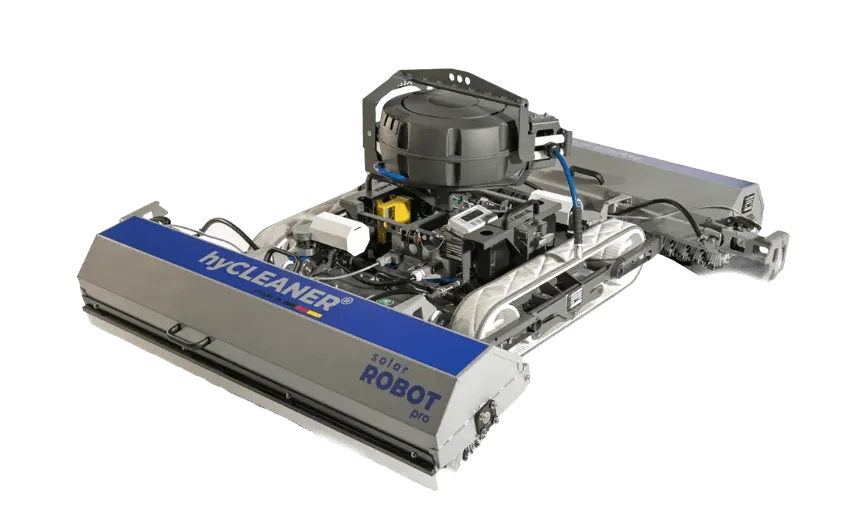
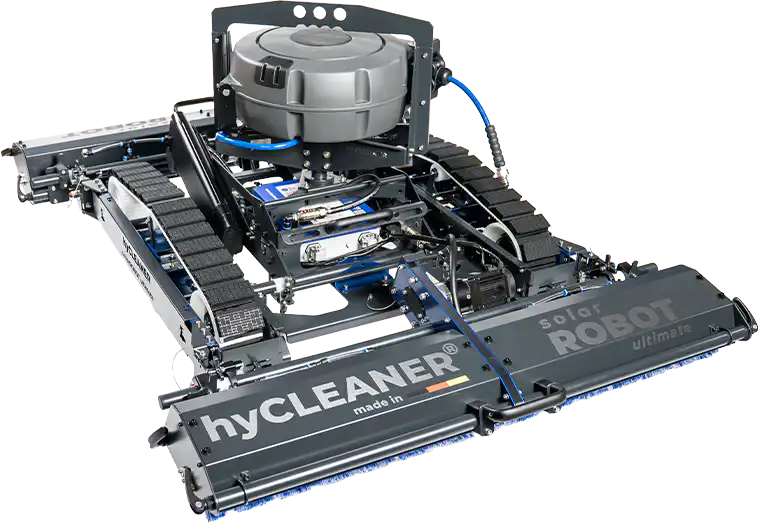
For large-scale systems and ground-mounted projects. With a working width of 2.4 meters, maintenance-free chain drive and high area performance, the solarROBOT Ultimate was developed for professional use on large PV systems.
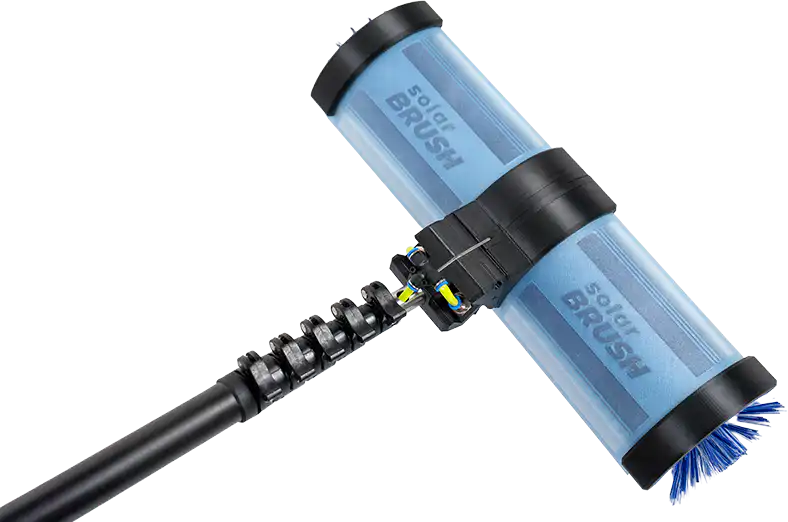
The handheld cleaning solution for special constructions, complex roof geometries and professional cleaning service providers. Ideal for applications where cleaning robots cannot be used due to the design.
All systems clean without chemicals or soap using pure water and enable gentle, material-friendly cleaning of PV systems.
We analyze your system portfolio, calculate your individual cleaning needs and recommend the economically optimal cleaning concept—from a single system to a multi-site park.
Even light soiling can cause a 5–20% drop in performance—on large systems, that can quickly amount to several thousand euros per year.
Calculate your loss here.
As soon as there is a measurable loss of yield or visible soiling. For commercial systems, cleaning often pays off after just one season.
Generally every 12–24 months. In dust-intensive regions or in agriculture/industry, often more frequently.
Yes—especially for rooftop systems. Fall risk, module breakage, and liability issues make professional methods advisable.
Depending on size and soiling, usually between €2–€6 per square meter
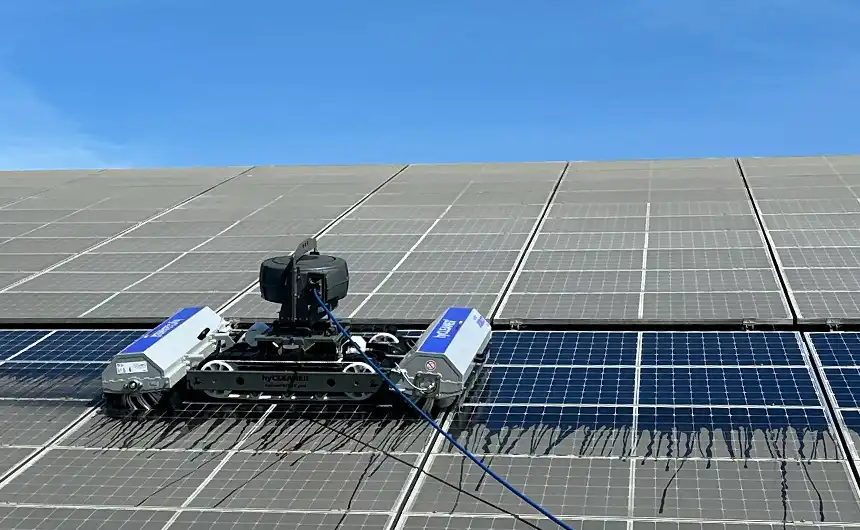
Robots move autonomously over the modules, brush the surface, and use water or dry methods—consistently and gently on materials.
Calculate your individual yield loss with the hyCLEANER solar loss calculator.
We recommend the economically right cleaning concept for your system.
How much does a dirty solar system cost? Example calculations for agriculture, commercial roofs and ground-mounted systems – incl. yield losses and cleaning intervals.
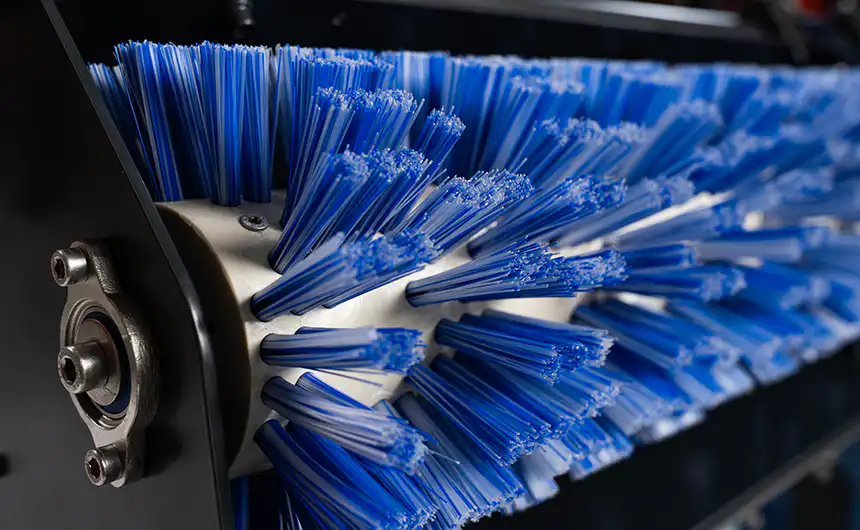
Find out which photovoltaic cleaning brushes are suitable for different systems and what matters when it comes to material, bristles and gentle cleaning.
Why is the maintenance of a PV system so important? Expert Pascal Kierstein explains how cleaning, monitoring, and maintenance secure yield and profitability.