Water pressure and water volume for cleaning large PV systems
- Expert Knowledge
Problem: Poor cleaning due to incorrect water usage
Operators of large photovoltaic systems face a recurring technical problem:
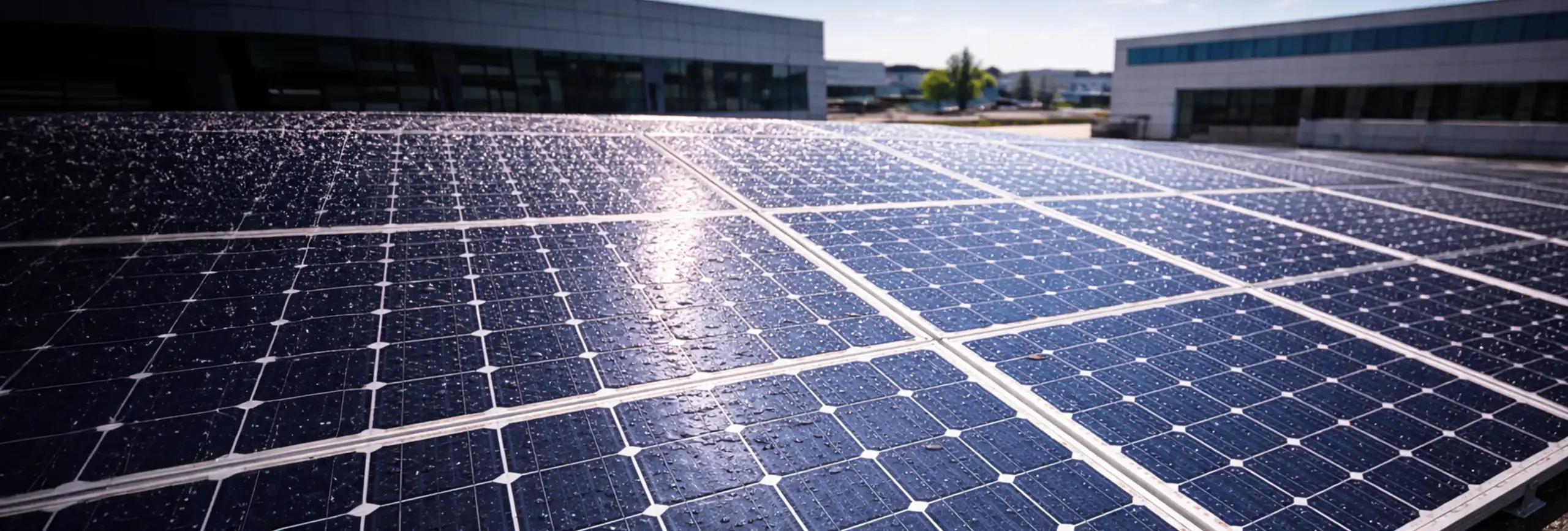
- Many cleaning methods use too little water or utilize high-pressure cleaners – which may seem powerful for solar modules, but can damage the sensitive glass surface.
- Pure low pressure on smooth PV surfaces can cause abrasion from dirt particles without a sufficient water volume, instead of dissolving them.
- Furthermore, height differences and long hose distances lead to water pressure losses that reduce the cleaning effect.
- Incorrectly sized hoses further reduce water throughput and thus the cleaning performance.
→ Studies on PV cleaning techniques recommend adjusted water volumes and suitable pressure to optimize cleaning efficiency and module protection.
Solution: Low pressure + sufficient water volume + correct hose technology
lore
1. Pre-cleaning and main cleaning with water
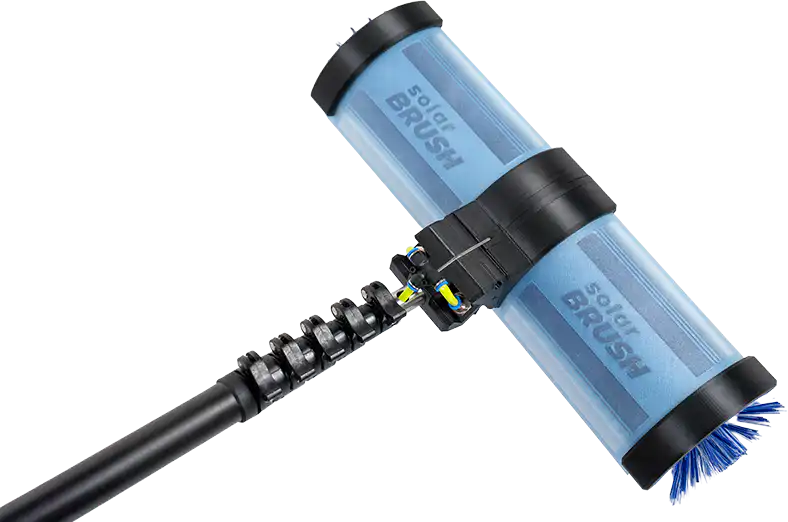
For optimal results, pre-cleaning and main cleaning with water is recommended, ideally with osmosis water:
Osmosis water is free of salts, minerals, and residues, offering a gentle yet effective cleaning without additives.
The filtered water creates a flushing effect that gently dissolves dirt without rubbing.
Benefit: Gentle removal of dirt, lower risk of scratching, and less post-cleaning required.
2. Low-pressure range instead of high pressure
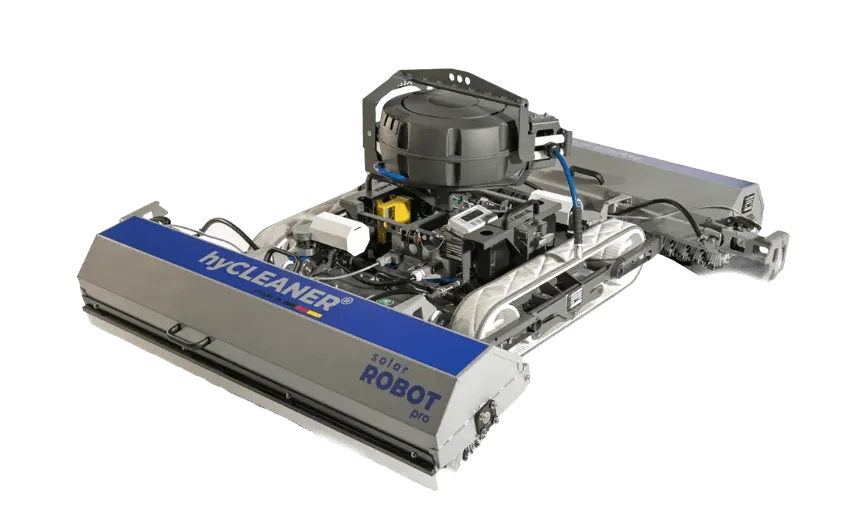
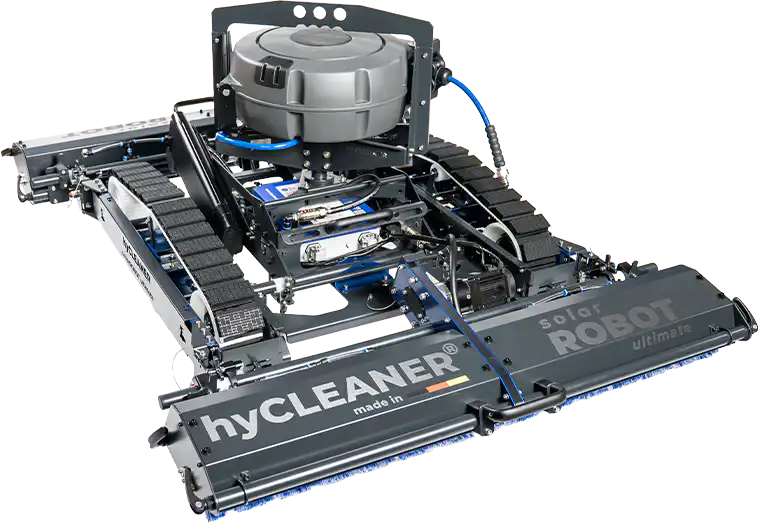
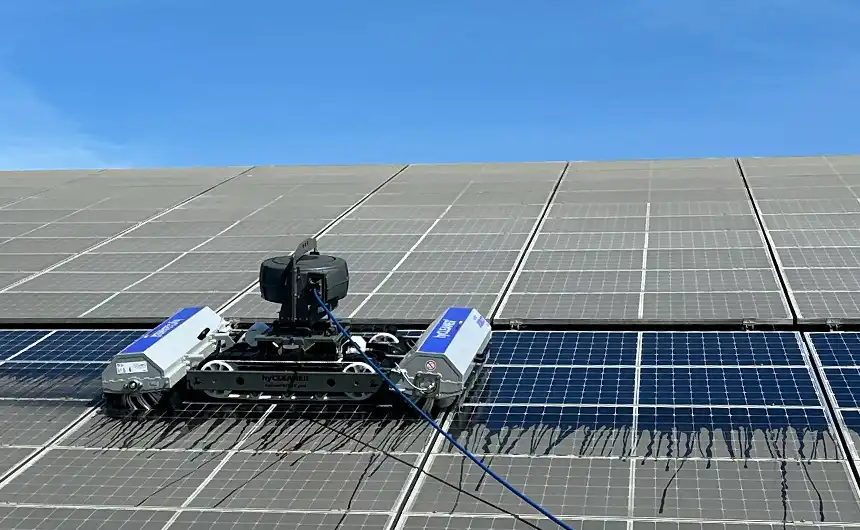
Solar cleaning robots work effectively in the low-pressure range (approx. 2–4 bar) – this is roughly the same as a standard tap connection. Low-pressure cleaning ensures the surface of the modules is not damaged.
Benefit: Gentle cleaning without risk to module glass or seals.
3. Consider water pressure losses and hose diameter
Pressure losses are caused by:
Height differences: Rule of thumb: ~1 bar pressure loss per 10 m height
Long hose lengths and small internal diameters: reduce water throughput
hyCLEANER recommends supply hoses with an internal diameter of at least 10 mm for the solarROBOT series to ensure sufficient water flow.
Benefit: Constant water pressure and higher cleaning effect across the entire system.
Advantages of the correct water strategy
| Challenge | Solution | Result |
|---|---|---|
| Dirt rubs instead of dissolving | Osmosis water + sufficient water volume | Less abrasion & cleanliness |
| Pressure losses | Correct hose + pressure planning | Uniform cleaning |
| Module risks | Low pressure instead of high pressure | No surface damage |
Dirt rubs instead of dissolving
Solution
Osmosis water + sufficient water volume
Result
Less abrasion & cleanliness
Pressure losses
Solution
Correct hose + pressure planning
Result
Uniform cleaning
Module risks
Solution
Low pressure instead of high pressure
Result
No surface damage
Tagged Solar