Optimising PV systems: maximum efficiency for industry & commerce

Maintenance · Cleaning · Storage – the complete guide for industry & commerce

Industrial and commercial PV systems are under enormous pressure to perform: rising energy costs, increasing grid charges and stricter self-consumption targets mean that every percentage point of lost yield is real money. Anyone looking to optimise their PV system must systematically use every lever—not just individual measures.

However, the reality in many businesses looks different: photovoltaic modules are dirty, inverters run without regular inspection, and energy storage systems are neither correctly sized nor optimally integrated into the system.

This guide provides a comprehensive overview of the three key pillars: PV maintenance, professional solar cleaning and commercial battery storage. We also highlight the legal requirements that many system operators underestimate.

I. MAINTENANCE – THE INVISIBLE YIELD LEVER

How much yield does a commercial PV system lose without regular maintenance?

Studies on monitoring photovoltaic systems show that many commercial systems perform significantly below their potential without regular maintenance—often in the range of 10–25%, and in individual cases even up to 30%. Anyone who wants to optimise their PV system should not underestimate these losses.


The causes are rarely obvious defects. Instead, they are usually gradual issues: slightly faulty MPPT trackers in the inverter, contact corrosion in the DC strings, unnoticed arc faults, or temperature-related power reductions.

These small deviations often go unnoticed for a long time in day-to-day operations—but over time they add up to significant yield losses. What initially seems like a 1–2% loss per month can add up over a year to several tens of thousands of euros for a 500 kWp system.

System size (kWp)

500 kWp (reference)

Specific annual yield

~950 kWh/kWp (Central Europe)

Annual generation (target)

475,000 kWh

Loss at 10% underperformance

47,500 kWh/year

Lost revenue (€0.18/kWh)

≈ €8,550/year

Loss at 25% underperformance

118,750 kWh/year

Lost revenue (€0.18/kWh)

≈ €21,375/year

What does professional maintenance for commercial PV systems include?

In practice, maintenance of a PV system is often underestimated and reduced to a simple visual inspection. However, a full inspection in accordance with IEC 62446 and the requirements of VDE 0100-712 includes far more. It goes well beyond a basic check and includes the following measures:

  • Electrical testing of all DC and AC strings (insulation measurement, open-circuit voltage, short-circuit current)
  • Inverter maintenance: Checking fan units, capacitors, firmware updates, log file analysis for event codes
  • Thermographic inspection: infrared imaging of all modules and connection points to detect hot spots
  • Inspection of equipotential bonding conductors and the lightning protection system
  • Leak test of the mounting structure (wind load classes, corrosion)
  • Evaluation of yield monitoring: target/actual comparison over a rolling 12-month period
  • Feed-in management and smart meter gateway: Correct parameterisation in accordance with EEG and BDEW guidelines

👉 The aim of these measures is to identify hidden performance losses early and to operate the photovoltaic system efficiently and safely over the long term.

Expert tip: Always commission the electrical test from an DGUV V3-certified qualified electrician. This is the only way the test is legally valid for insurers and authorities.

How often should an inverter be serviced in industrial PV systems?

Manufacturers generally recommend an annual inverter inspection. In practice, however, the following applies: anyone who wants to optimise their PV system should plan at least semi-annual checks for commercial systems from 100 kWp upwards.

Especially in industrial environments, dust, heat and continuous load lead more quickly to wear and performance drops. Regular maintenance reduces the risk of failure and secures long-term yield.

Key maintenance intervals at a glance:

  • Fan filters: clean every 6 months (high dust exposure in industrial environments)
  • Capacitors: inspect specifically after 8–10 years of operation and replace if necessary
  • Power semiconductors (IGBT): no direct testing possible; degradation becomes apparent through declining efficiency
  • Firmware: check for updates and security patches at least once a year—cyber risks in the energy sector are increasing


👉 Conclusion: A structured maintenance plan for the inverter is a key building block for operating the PV system efficiently and safely over the long term.

II. CLEANING – WHEN DIRT BECOMES A COST FACTOR

How much does soiling reduce the yield of a photovoltaic system?

In practice, the impact of soiling on yield is often underestimated—yet cleaning is one of the most effective measures to increase the performance of a photovoltaic system and secure high yields over the long term.


Research findings from Fraunhofer ISE as well as long-term studies in Central Europe show: in locations close to industry, soiling can lead to yield losses of 15–25% per year. Systems near agriculture (pollen, dust), industry (soot, fine particulate matter) and heavily trafficked roads (tyre wear, diesel particles) are particularly affected.


However, measurable losses also occur in supposedly clean regions: studies by ETH Zurich and Bern University of Applied Sciences show that even in residential areas, yield losses of 4–8% can occur without regular cleaning. Rain alone is not sufficient—it can even consolidate dirt films instead of removing them.


Anyone who wants to maximise the yield of their solar system over the long term should therefore rely on regular, professional cleaning.

Important: Chemical cleaning agents can attack the anti-reflective coating and the encapsulation of PV modules. Studies by the Fraunhofer Institute show that cleaning agents can reduce the performance of photovoltaic modules by up to 5.6%. hyCLEANER relies exclusively on chemical-free, mechanical wet cleaning.

Which cleaning method is most effective for industrial PV systems?

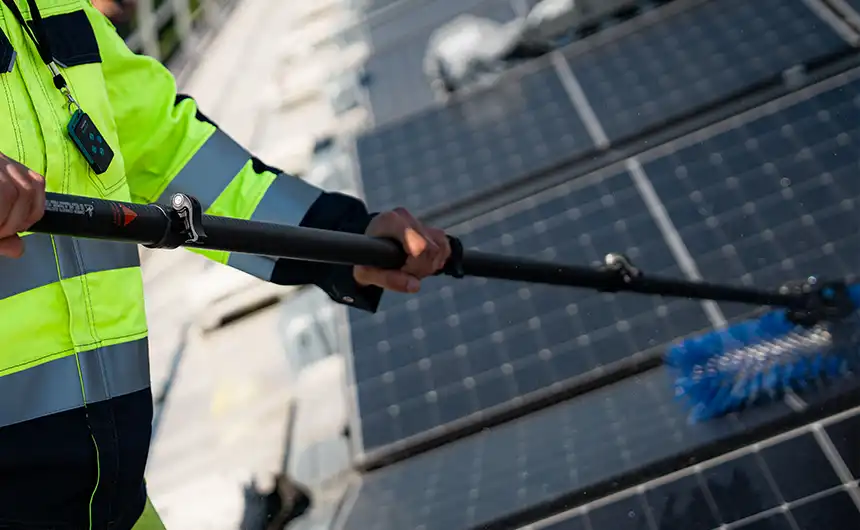
For commercial and industrial photovoltaic systems from around 100 kWp, purely manual cleaning is generally neither economical nor sensible from a safety perspective. Instead, semi- or fully automated processes have become established as the efficient standard.


What matters is not only the cleaning effect, but also a clearly defined requirements profile:

  • High area throughput: > 500 m²/h, economically necessary for large rooftop or ground-mounted systems in the MWp range
  • Chemical-free cleaning: protects the module surface and avoids environmental pollution from residues in wastewater
  • Pressure-controlled brush systems: consistent contact pressure reduces the risk of micro-scratches and damage to seals
  • Minimised personnel deployment on the roof: increases occupational safety and reduces accident risks as well as static loads
  • Cleaning documentation: automatic logging enables proof for operators, insurers and as part of maintenance


👉 Conclusion: The most effective cleaning method combines mechanical, water-based cleaning with automated or robot-assisted systems—especially for larger systems.

How does a cleaning robot for photovoltaic systems do this better than manual cleaning?

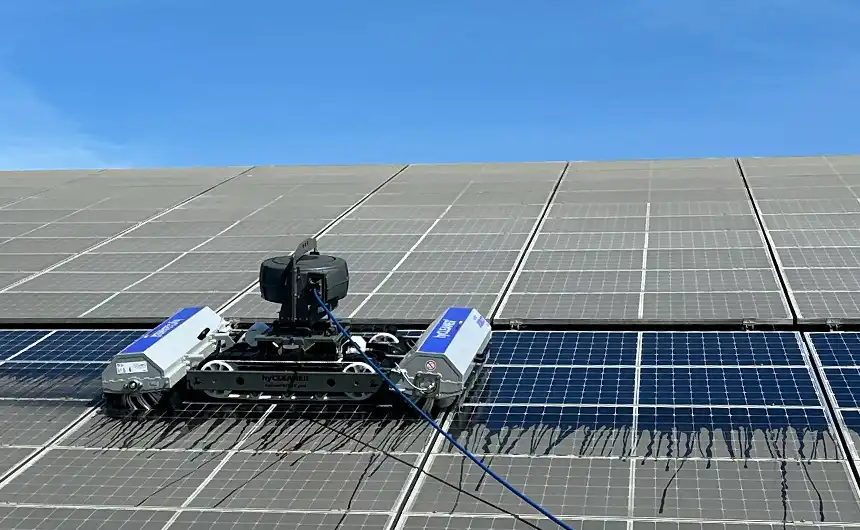
Compared to manual cleaning, robot-assisted systems offer clear advantages in terms of safety, efficiency and consistent quality—especially for large rooftop and ground-mounted systems.


While manual methods depend heavily on personnel, weather and day-to-day condition, automated solutions enable standardised and reproducible results.


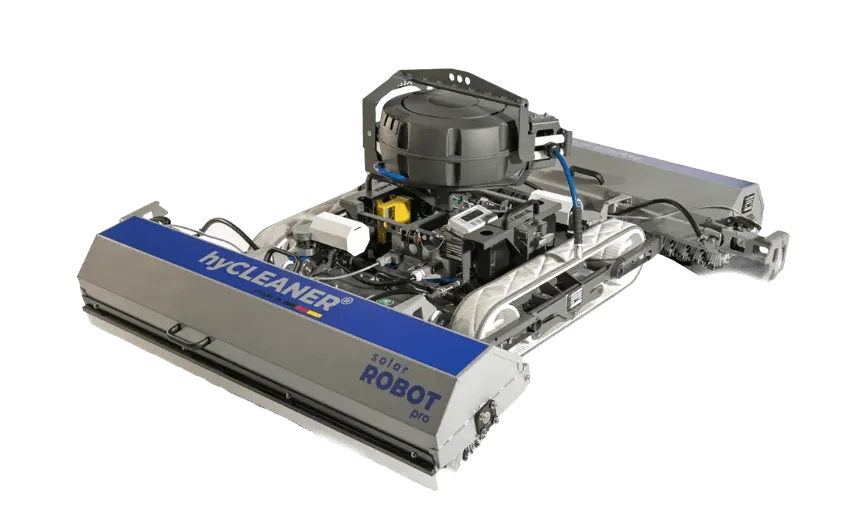
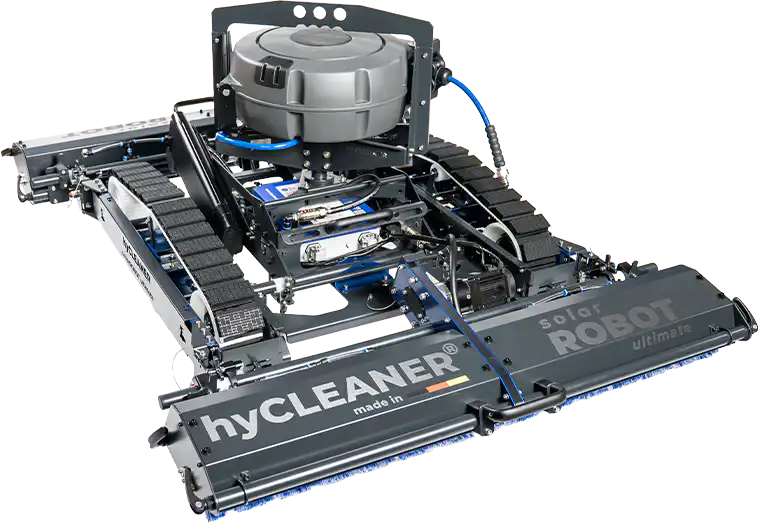
The solarROBOT from hyCLEANER was developed specifically for these requirements and demonstrates how industrial photovoltaic systems can be cleaned efficiently and gently on materials.

The solarROBOT pro operates automatically, chemical-free and with constant brush pressure. This results in the following advantages over manual methods or high-pressure cleaners:

  • Safety: No personnel required on the roof surface—reduced risk of falls and no additional access systems
  • Reproducibility: Consistent cleaning quality with every use, regardless of personnel or conditions
  • Cost-effectiveness: Depending on system size, deployment can pay for itself after just a few cleaning cycles
  • Module protection: Pressure-regulated brush systems without chemicals minimise the risk of damage to glass and coating
  • Documentation: Automatic recording of the cleaned area—important for proof to operators and insurers


Suitable systems are available for different system sizes:
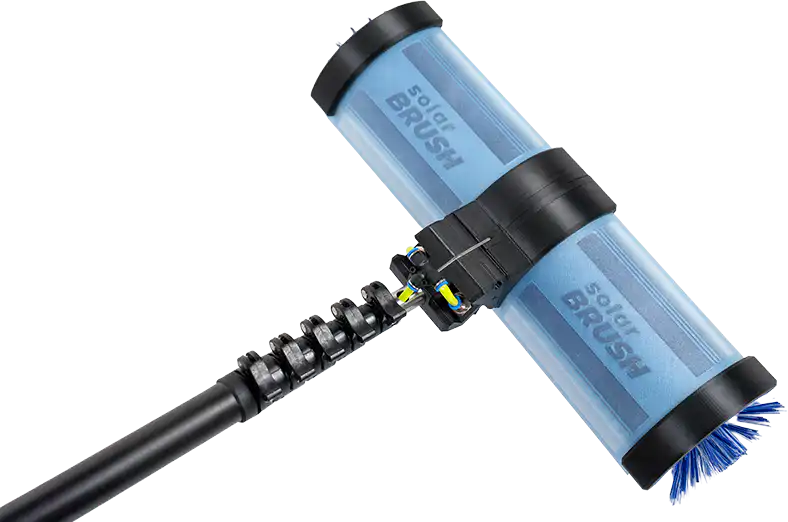
The solarROBOT compact is suitable for smaller commercial roofs, while the solarROBOT pro is designed for large-scale industrial and ground-mounted systems. In addition, the solarBRUSH enables targeted cleaning of hard-to-reach areas and special surfaces.

👉 Conclusion: For larger photovoltaic systems, robot-assisted cleaning systems are the most efficient solution for carrying out cleaning economically, safely and with consistently high quality.
How often should industrial solar systems be cleaned?

The optimal cleaning frequency for photovoltaic systems depends on the location:

Location type

Recommended frequency

Typical yield loss if not cleaned

Industry (exhaust, dust)
1–4x/year

15–25%

Agriculture (pollen)

1–3x/year

10–18%

Commercial area / logistics

1–2x/year

8–15%

Residential area / suburban

0.5–1x/year

4–8%

Ground-mounted, remote

0.5–1x/year

3–6%

III. ENERGY STORAGE – THE THIRD LEVER WHEN ENERGY COSTS ARE HIGH

Is a battery storage system really worth it for commercial PV systems?

With current energy costs: clearly yes—if it is correctly sized.


A battery storage system for commercial photovoltaics is no longer a luxury, but a strategic instrument for reducing energy costs. The decisive lever is self-consumption optimisation: electricity that leaves the system during peak generation and is fed into the grid at low prices can instead be retained in the storage system and used during peak loads or at night with significantly higher value.

For businesses with relevant peak-demand loads, a commercial PV storage system also offers the option of peak shaving, i.e. targeted reduction of power draw during expensive high-load time windows. Depending on the grid charge structure, this alone can save 10–40% of grid costs.

Which storage technology is suitable for industrial PV systems?

Three systems dominate industrial use today:

  • LFP (lithium iron phosphate): Thermally stable, cycle-resistant (3,000–6,000 full cycles), preferred technology for stationary industrial storage
  • NMC (nickel manganese cobalt): Higher energy density, but lower cycle life—more suitable for applications with space constraints
  • VRFB (vanadium redox flow): For large-scale systems >500 kWh, virtually unlimited cycle life, high initial investment


For commercial SMEs—i.e. 100 kWp to 1 MWp solar systems—the following applies: LFP in containerised design with integrated BMS and upstream DC couplers is state of the art today.

How do I correctly size a PV storage system?

For a representative industrial PV system (500 kWp, production operation, energy costs > €0.20/kWh):

Correct sizing of the PV storage system is crucial for ROI. Rules of thumb often lead to over- or undersizing. The proven methodology in practice:

  • Load profile analysis: evaluate 15-minute intervals over at least 12 months
  • Overlay PV feed-in profile with load profile: identify surplus on an hourly basis
  • Storage size = 1.0–1.5 times the daily PV surplus on annual average
  • Calculate peak-shaving potential separately: reduced power draw × grid charge × operating days
  • Consider efficiency: charging efficiency × discharging efficiency × inverter efficiency ≈ 88–93%

IV. SAFETY & COMPLIANCE – THE UNDERESTIMATED RISK

What legal obligations does the operator of a commercial PV system have?

The operator’s obligations are more extensive than many realise—and the risk of neglect is significant.

Commercial and industrial PV systems are subject to a range of standards and regulations, compliance with which is the operator’s responsibility:

  • VDE 0100-712: Erection of low-voltage installations – PV power supply systems. Specifies test intervals, protective devices and documentation obligations.
  • IEC 62446 / DIN EN 62446: Requirements for documentation, commissioning and testing of PV systems.
  • DGUV Regulation 3 (formerly BGV A3): Annual mandatory testing of electrical systems and equipment by qualified electricians.
  • Building codes / state building regulations: Structural suitability of the substructure, fire brigade access routes, smoke vents on roof surfaces.
  • VdS 3145 (guideline for fire and lightning protection): Relevant for insurance cover and risk classification. Many industrial insurers explicitly require thermography evidence.

What does an operator risk by neglecting maintenance and cleaning?

The consequences of unmaintained and uncleaned PV systems are diverse and go far beyond pure yield risk:

  • Insurance cover: Many photovoltaic insurance policies contain duty-of-care clauses. In the event of fire damage attributed to an ignored arc fault and no maintenance evidence is available, the insurer may reduce or refuse payment.
  • Fire risk: Hot spots caused by module soiling (partial shading from bird droppings, leaves) and defective bypass diodes are proven causes of fire. Cleaned and maintained equipment significantly reduces this risk.
  • Loss of warranty: Module manufacturers often tie performance warranties to maintenance and cleaning records. Chemical cleaning agents almost always lead to warranty exclusion.
  • Operating permit: For grid-connected systems with direct marketing, a lack of evidence can, in the worst case, lead to temporary shutdown by the grid operator.

How does a cleaned and maintained system perform better with authorities and insurers?

A documented maintenance and cleaning history is now the strongest lever for being legally protected both in the event of damage and during inspections. Specifically:

  • Maintenance report in accordance with VDE 0100-712 = evidence of the operator’s duty of care
  • Thermography reports = early-warning evidence for insurers
  • Cleaning logs with date, area, method = basis for maintaining module warranty
  • No use of chemicals = evidence of environmentally responsible operation (relevant for ISO 14001)

V. THE BUSINESS CASE – CALCULATED IN CONCRETE TERMS

What does the combination of maintenance, cleaning and storage deliver in concrete terms?

For a representative industrial PV system (500 kWp, production operation, energy costs > €0.20/kWh):

Measure

Annual savings (estimated)

Annual investment

Professional maintenance (1x/year)

€5,000–€15,000

€1,500–€3,500

Solar cleaning (1–2x/year, robot)

€8,000–€25,000

€4,000–€8,000

Peak shaving via storage

€10,000–€40,000

One-off investment

Self-consumption optimisation via storage

€12,000–€30,000

(Payback 5–8 years)

The complete three-pillar approach of maintenance, cleaning and storage unlocks realistic additional yields and cost savings of €35,000–€110,000 per year for a 500 kWp system—at annual operating costs that typically amount to 5–12% of the savings.

CONCLUSION AND NEXT STEPS

Maximum efficiency for your PV system is not achieved through a single measure, but through the consistent interplay of regular inverter inspection and electrical maintenance, documented, chemical-free solar cleaning, and an intelligent storage strategy for commercial self-consumption. Added to this is legally robust documentation that protects operators from significant liability risks.

hyCLEANER supports operators of industrial photovoltaic systems as a technology partner in robot-assisted solar cleaning. Contact us—for an individual analysis of your system and a non-binding quotation.

DO YOU HAVE FURTHER QUESTIONS?

Please feel free to send us a message; we will get back to you promptly.

*Required field