- Expert Knowledge
How does optimal water distribution work in PV cleaning?
What role does water distribution play in PV cleaning?
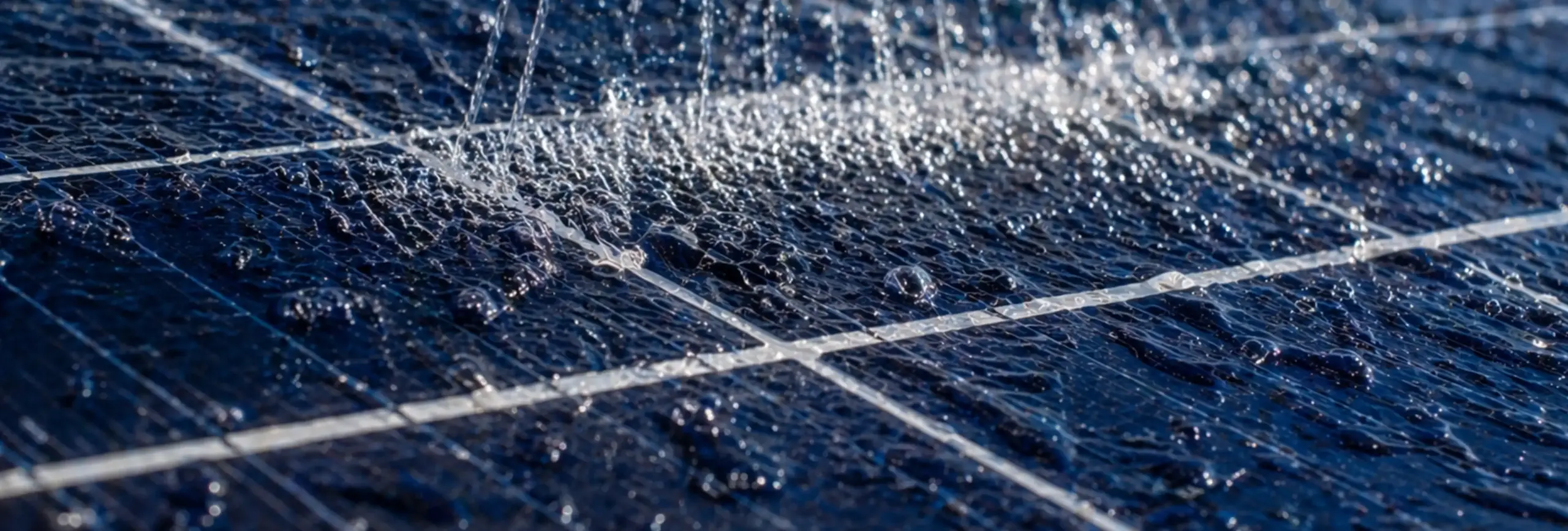
Water distribution controls how effectively you remove soiling from PV modules while achieving an even cleaning result. It determines how water is distributed across the surface, how well dirt particles are carried away, and how efficiently you can run the entire cleaning process.
In this article, you will learn how optimal water distribution works in practice, which technical solutions are used, and how you can achieve better results while using less water.
You can find further technical details and background information in our expert article: The perfect PV cleaning device – the right solution for your solar surface.
Why is the right water distribution crucial for PV cleaning quality?
The right water distribution ensures that soiling is removed effectively while delivering even, streak-free results.
Only when you apply water in a targeted and even way can you reliably remove dirt particles from the module surface. At the same time, you reduce friction between the brush and the glass, protecting the surface and enabling more controlled operation.
In addition, water distribution directly affects your efficiency. Optimized distribution ensures you need less water while still achieving a better cleaning result. At the same time, you avoid residues and streaks that can impair the performance of PV modules.
Problem: Uneven water distribution worsens cleaning and increases water consumption
If you use water distribution incorrectly, you clean inefficiently and waste unnecessary resources at the same time.
If too little water is used, soiling does not dissolve completely. This increases friction on the surface, making cleaning more difficult and putting greater strain on the modules.
If, on the other hand, too much water is used, costs increase and so does the risk of streaking. Excess water spreads dirt particles uncontrollably, worsening the cleaning result. Soiling on PV modules is not only a visual issue, but has been proven to lead to measurable losses in yield and value, as current studies show.
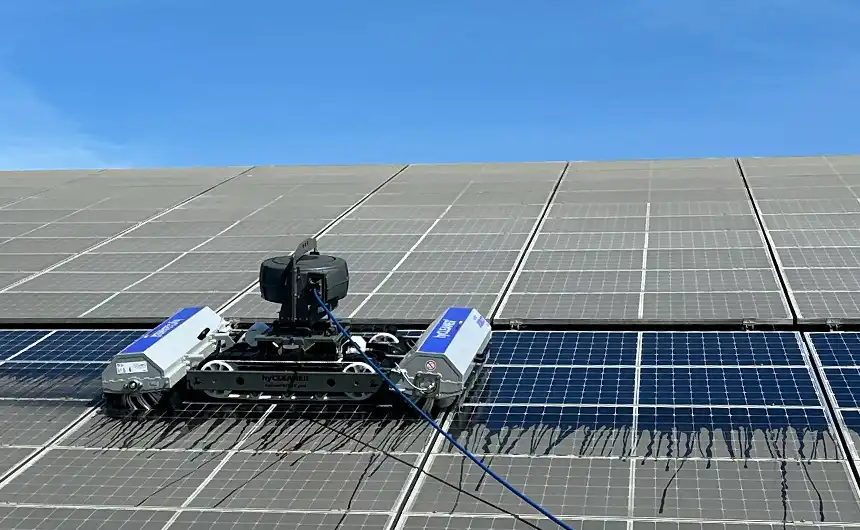
In addition, poorly designed systems often lead to uneven water distribution. Some areas are rinsed sufficiently, while others remain too dry. The result is unevenly cleaned PV modules and an inefficient cleaning process.
Solution: Optimized water distribution ensures efficient and even cleaning
With the right water distribution, you clean your PV system more efficiently, more evenly, and with significantly greater resource efficiency.
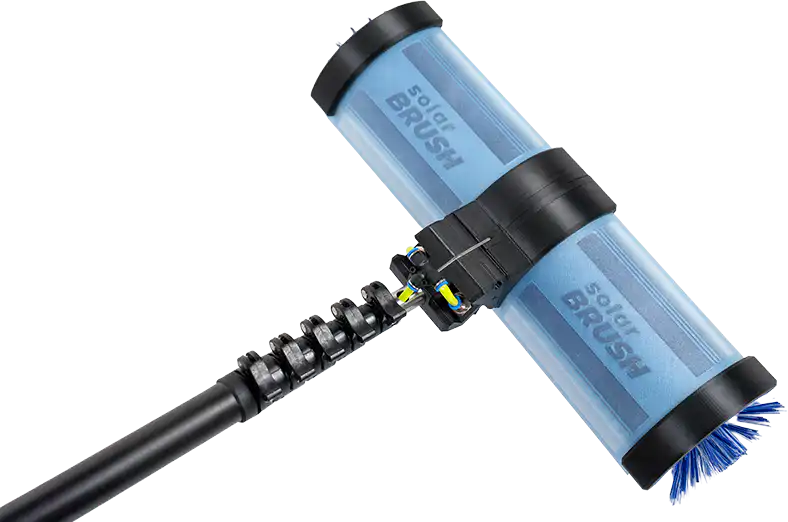
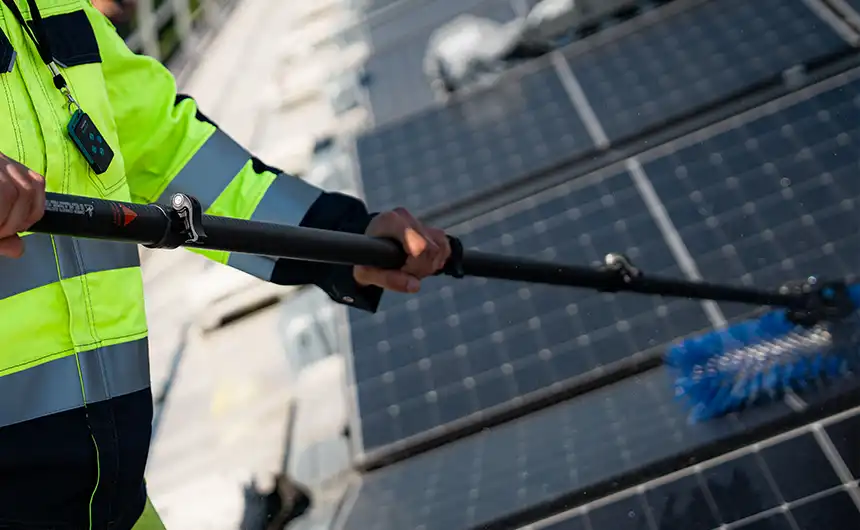
Choose systems that distribute water evenly along the brush. Integrated water channels in the brush head ensure that the water is released precisely where it is needed. This allows you to remove dirt effectively and avoid areas that are too dry or overly wet.
Ideally, use demineralized water to avoid limescale spots and residues. This keeps the module surface clean and streak-free after cleaning.
An adjustable water flow also helps you adapt the water volume to the level of soiling and the environmental conditions. This prevents unnecessary consumption while increasing cleaning performance.
Overview: What are the benefits of optimal water distribution in PV cleaning?
Water distribution
Typical Benefit
Even water distribution
Integrated water distribution in the brush head
Improves dirt removal directly on the surface
Adjustable water flow
Reduces water consumption and adapts flexibly to the level of soiling
If you optimize water distribution in a targeted way, you not only clean more thoroughly, but also work more economically and sustainably at the same time.
Conclusion
With optimal water distribution, you can precisely control the entire cleaning process and get the most out of your PV cleaning. You remove soiling efficiently, avoid residues, and achieve even results across the entire module surface.
At the same time, you reduce water consumption and lower the workload. Those who use water distribution correctly not only work more economically, but also safeguard the long-term performance of the PV system.