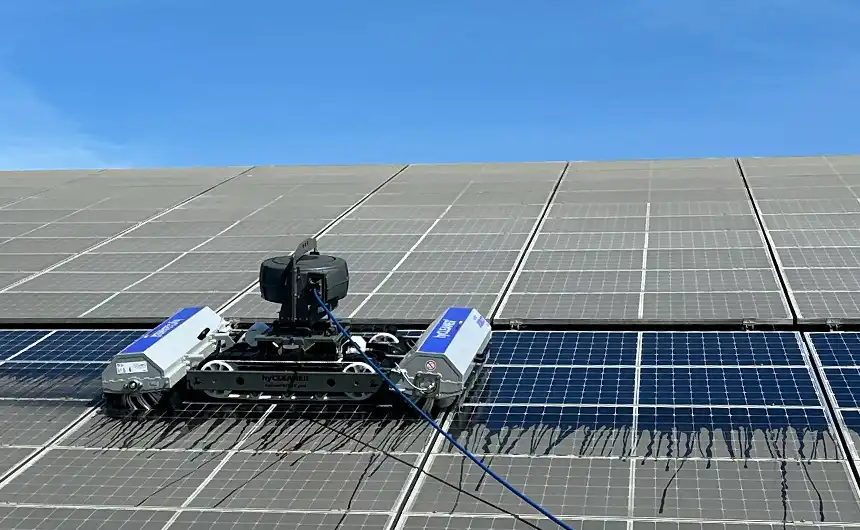
Why is it worth entering PV cleaning? Growing market, recurring revenues, and scalable business models through modern robotic technology.



Startseite ❯ Solar-Fachartikel ❯ Expert Knowledge ❯ Why Osmosis Water is the Best Cleaning Solution for PV Systems
Photovoltaic systems deliver the highest energy yield when their surfaces are as free from dirt as possible. Dust, pollen, bird droppings, sand, or agricultural deposits can impair the light transmittance of the modules, thereby reducing the system’s performance. Consequently, cleaning with osmosis water has become the established standard for professional cleaning. The specially treated pure water effectively removes dirt and leaves no residue on the sensitive module surfaces.
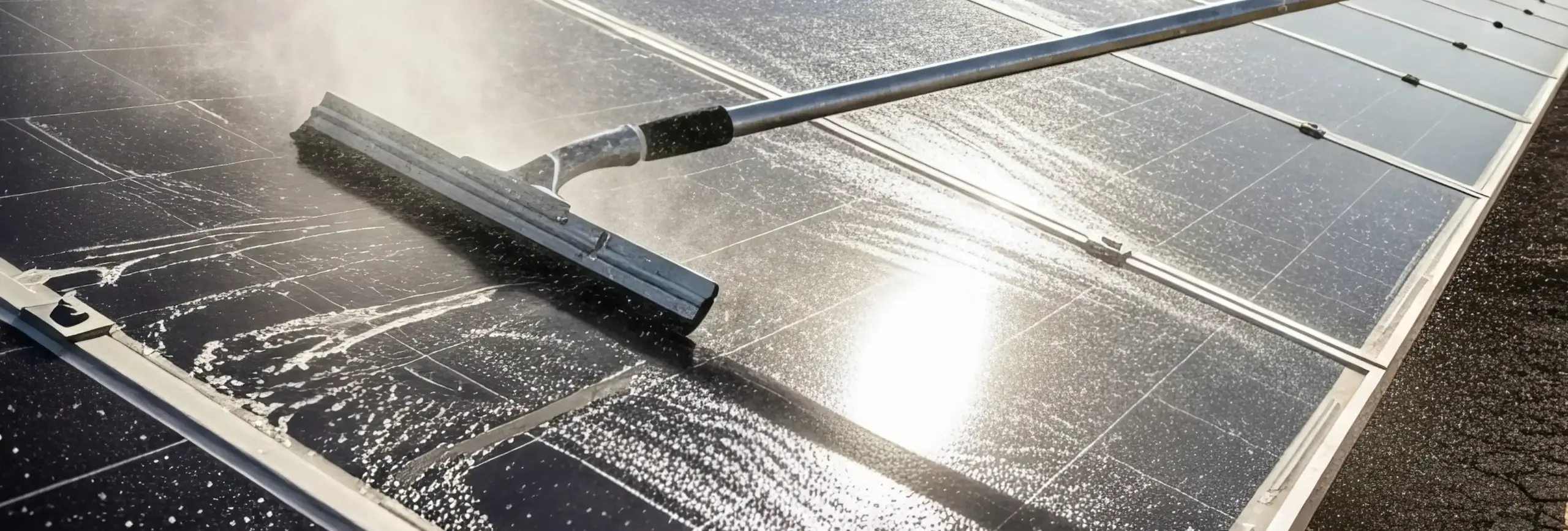
Dirt on solar modules acts as an additional barrier between sunlight and the solar cell. Depending on the location, this can lead to a noticeable loss of performance.
Systems located near the following are particularly affected:
Experience shows that depending on the environment, soiling can lead to significant yield losses. Regular cleaning helps maintain the system’s performance over the long term.
No limescale residue on the modules
The pure water dries almost residue-free and leaves no visible deposits.
Reduced re-soiling
Without limescale residue, dust and dirt have less surface to adhere to.
Gentle cleaning of sensitive solar cells
Cleaning is carried out without aggressive chemicals or abrasive additives
Chemical-free cleaning
Osmosis water has high cleaning power and often makes additional cleaning agents unnecessary.
Sustainable cleaning of large areas
Cleaning is resource-efficient and reduces environmental impact from chemical cleaners.
For large photovoltaic systems, water quality alone is not enough. The interaction between pure water and professional cleaning technology is crucial.
Modern cleaning robots combine:
This allows even large roof and ground-mounted systems to be cleaned efficiently. At the same time, companies benefit from increased occupational safety and more economical execution of cleaning work.
Osmosis water provides ideal conditions for the professional cleaning of photovoltaic systems. By removing limescale, minerals, and salts, no residue is left on the modules, which reduces re-soiling.
In combination with professional brush systems and cleaning robots, osmosis water enables efficient, gentle, and sustainable cleaning. For PV system operators, pure water is therefore one of the most effective solutions for securing the performance and value retention of the system in the long term.
Whether it’s an agricultural rooftop system, a commercial roof or a large solar park—the economically optimal cleaning solution depends on system size, location and degree of soiling. Together, we analyze your system and recommend the right cleaning concept.
Our cleaning solutions at a glance
solarROBOT compact
For agricultural as well as small and medium rooftop systems up to approx. 200 kWp. The cleaning robot can be used independently by the system operator and is supplied including a charging station. CE-certified and developed specifically for cost-effective in-house operation.
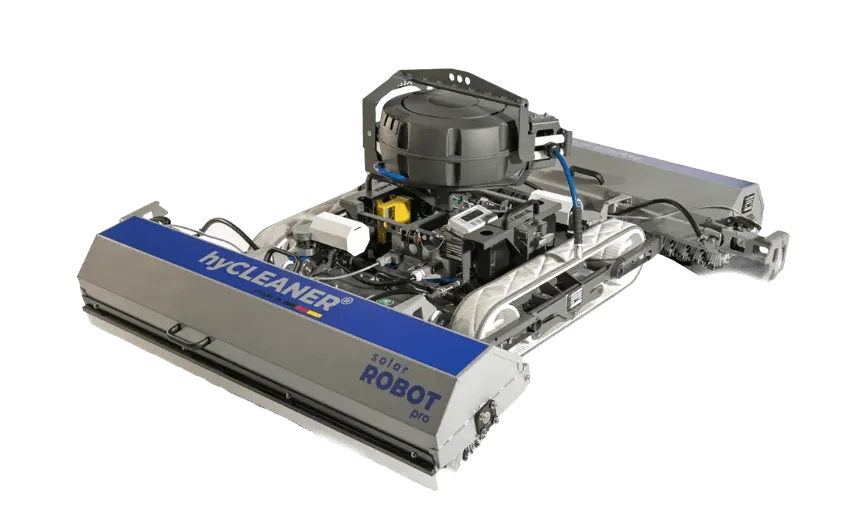
solarROBOT pro
For medium-sized commercial and ground-mounted systems. With a working width of up to 2 meters and semi-automated operation, the solarROBOT Pro is ideal for efficient cleaning of larger module areas.
solarROBOT ultimate
For large-scale systems and ground-mounted projects. With a working width of 2.4 meters, maintenance-free chain drive and high area performance, the solarROBOT Ultimate was developed for professional use on large PV systems.
solarBRUSH 600
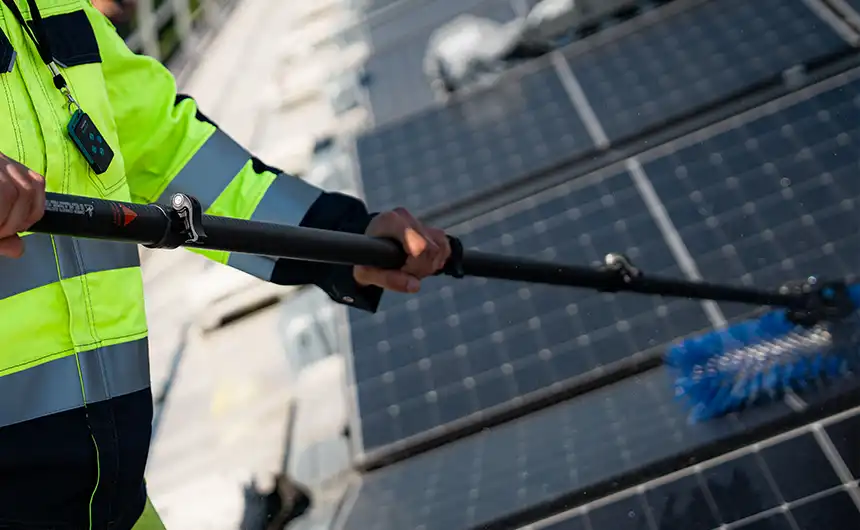
The handheld cleaning solution for special constructions, complex roof geometries and professional cleaning service providers. Ideal for applications where cleaning robots cannot be used due to the design.

For agricultural as well as small and medium rooftop systems up to approx. 200 kWp. The cleaning robot can be used independently by the system operator and is supplied including a charging station. CE-certified and developed specifically for cost-effective in-house operation.
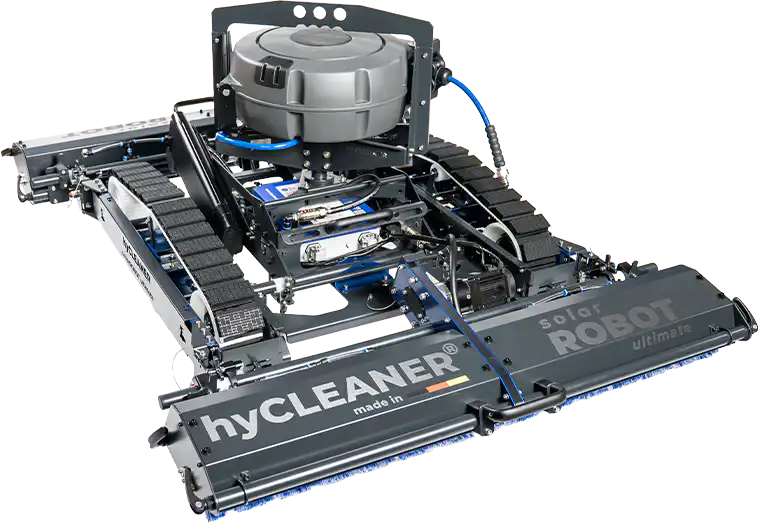
For large-scale systems and ground-mounted projects. With a working width of 2.4 meters, maintenance-free chain drive and high area performance, the solarROBOT Ultimate was developed for professional use on large PV systems.
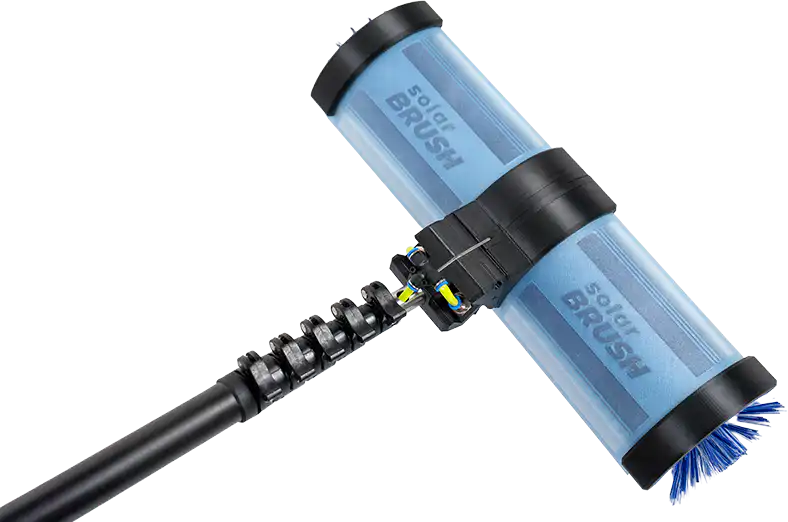
The handheld cleaning solution for special constructions, complex roof geometries and professional cleaning service providers. Ideal for applications where cleaning robots cannot be used due to the design.
All systems clean without chemicals or soap using pure water and enable gentle, material-friendly cleaning of PV systems.
We analyze your system portfolio, calculate your individual cleaning needs and recommend the economically optimal cleaning concept—from a single system to a multi-site park.
Even light soiling can cause a 5–20% drop in performance—on large systems, that can quickly amount to several thousand euros per year.
Calculate your loss here.
As soon as there is a measurable loss of yield or visible soiling. For commercial systems, cleaning often pays off after just one season.
Generally every 12–24 months. In dust-intensive regions or in agriculture/industry, often more frequently.
Yes—especially for rooftop systems. Fall risk, module breakage, and liability issues make professional methods advisable.
Depending on size and soiling, usually between €2–€6 per square meter
Robots move autonomously over the modules, brush the surface, and use water or dry methods—consistently and gently on materials.
Calculate your individual yield loss with the hyCLEANER solar loss calculator.
We recommend the economically right cleaning concept for your system.
Why is it worth entering PV cleaning? Growing market, recurring revenues, and scalable business models through modern robotic technology.
How much does a dirty solar system cost? Example calculations for agriculture, commercial roofs and ground-mounted systems – incl. yield losses and cleaning intervals.
Photovoltaic expert Pascal Kierstein explains the most common defects in commercial PV systems and shows how operators can prevent damage.
Even light soiling can cause a 5–20% drop in performance—on large systems, that can quickly amount to several thousand euros per year.
Calculate your loss here.
As soon as there is a measurable loss of yield or visible soiling. For commercial systems, cleaning often pays off after just one season.
Generally every 12–24 months. In dust-intensive regions or in agriculture/industry, often more frequently.
Yes—especially for rooftop systems. Fall risk, module breakage, and liability issues make professional methods advisable.
Depending on size and soiling, usually between €2–€6 per square meter
Robots move autonomously over the modules, brush the surface, and use water or dry methods—consistently and gently on materials.