How to clean solar panels? The best methods for safe PV cleaning
- Expert Knowledge
Increased safety through the use of a solar cleaning robot
Why safety is crucial in solar cleaning
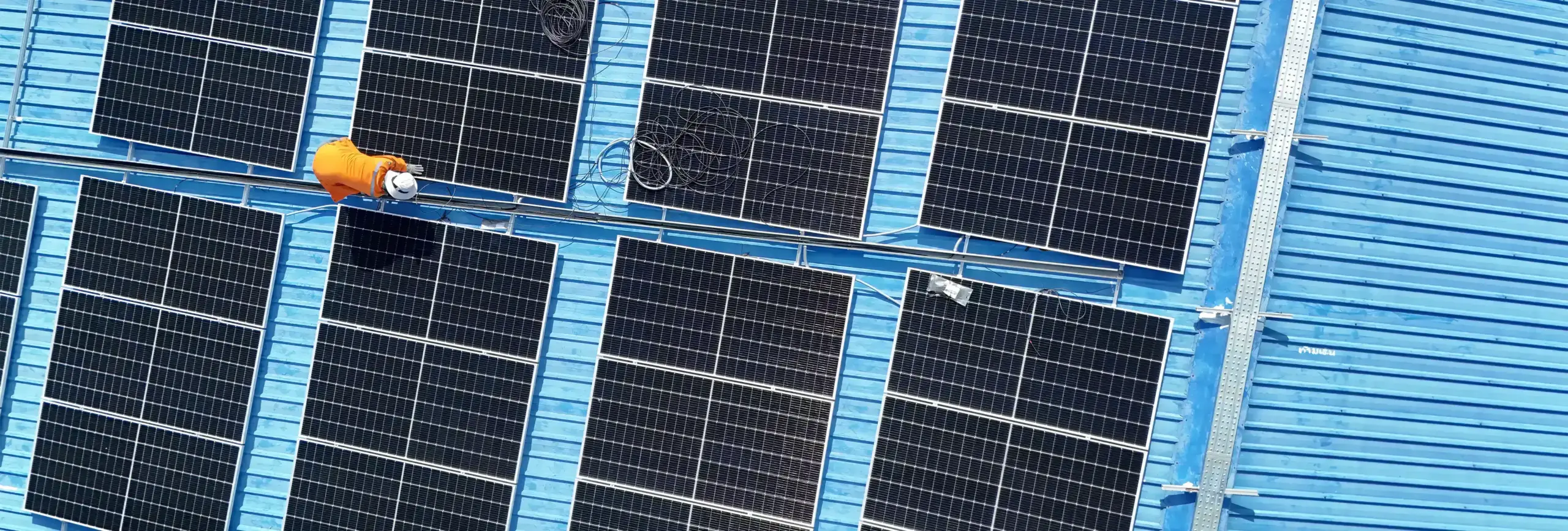
Cleaning photovoltaic systems involves significant risks – especially when working on roofs or large open spaces.
Typical hazards include:
- Risk of falling during roof work
- Unsafe movement on slippery module surfaces
- Physical strain from manual cleaning
- Damage to solar modules due to incorrect techniques
Without suitable aids, cleaning can quickly become a safety risk for personnel and the system.
How to clean solar panels – and why robots are the safe solution
The question of “how to clean solar panels” can be answered not only technically but also in terms of safety.
Suitable methods include:
- Demineralized water
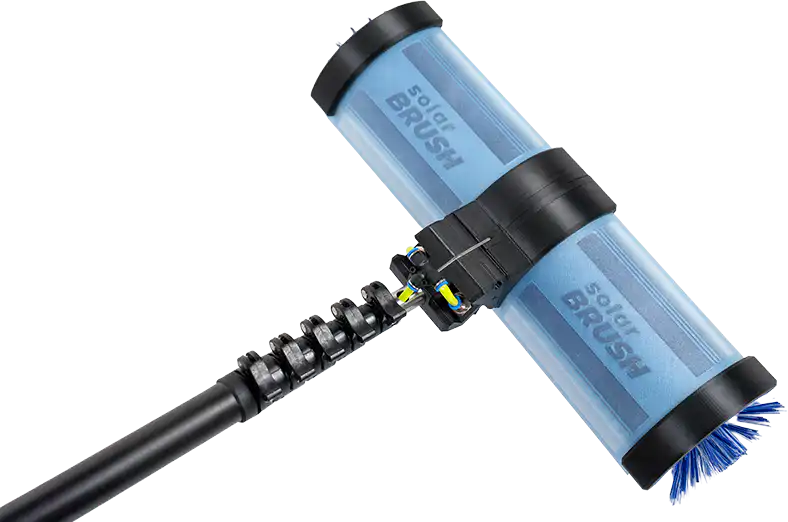
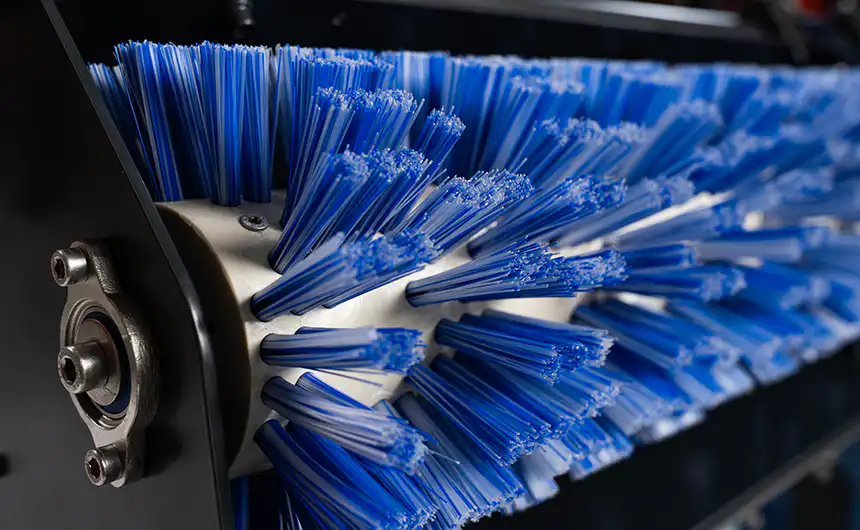
- Soft brush systems
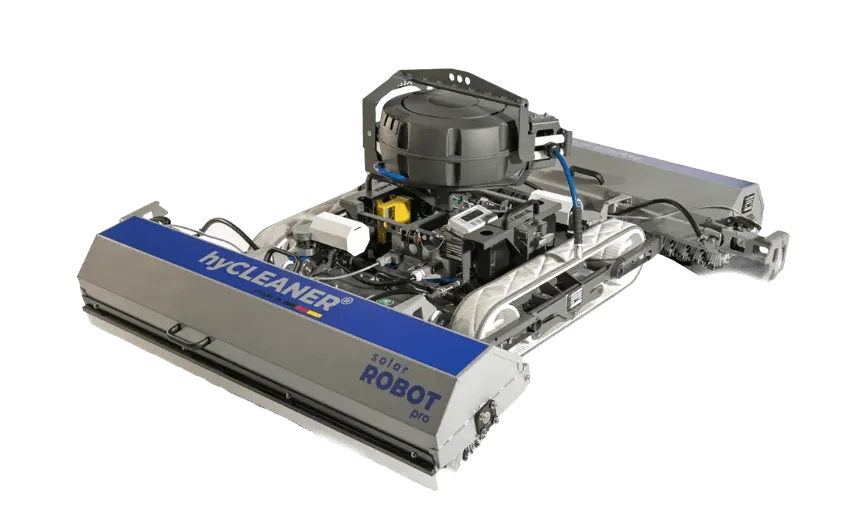
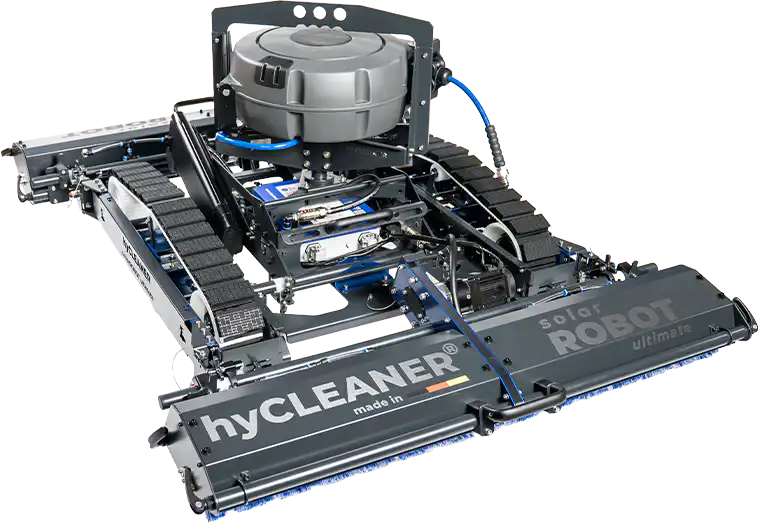
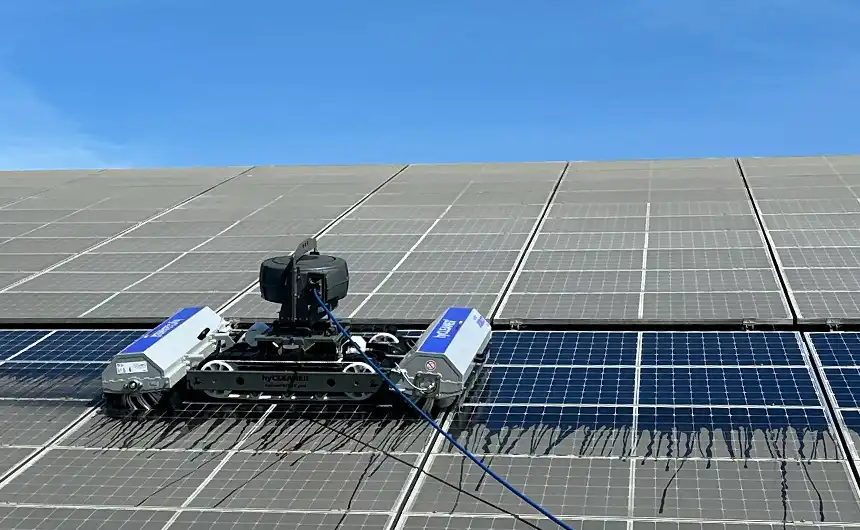
- Automated solar cleaning robots
Solar cleaning robots offer a decisive advantage: they minimize direct personnel involvement on the system, thereby significantly reducing the risk of accidents.
How solar cleaning robots increase safety
Modern systems like those from hyCLEANER are specifically developed for safe use.
Key safety features include:
- Radio remote control: Operation from a safe distance
- Edge detection: Automatic stop at module edges
- AutoDrive systems: Stable and controlled movement on the system
- Low physical strain: No direct work on the surface required
This makes cleaning not only more efficient but, above all, significantly safer.
Less risk for people and the system
The use of cleaning robots significantly reduces typical sources of danger.
Advantages at a glance:
- Reduced risk of falling
- No direct contact with the module surface
- Uniform, gentle cleaning
- Lower error rate than with manual cleaning
At the same time, the risk of damage to the PV system is minimized.
Efficiency and safety go hand in hand
In addition to safety, efficiency also plays a central role.
- Consistent cleaning results
- High area performance
- Predictable workflows
- Reduced personnel requirements
Automated cleaning saves time and costs while simultaneously increasing occupational safety.
Benefit
Value
Employee safety
Significantly reduces the risk of falls and accidents.
Cost-effectiveness
Less labor time, lower personnel costs, fast ROI.
Constant yield
Efficient cleaning maintains performance and increases output.
Scalability
Suitable for large commercial and ground-mounted systems.
Sustainable maintenance
Gentle cleaning without high pressure or chemicals.
Conclusion: How to clean solar panels – safety is the deciding factor
How to clean solar panels? The safest solution is the use of modern solar cleaning robots in combination with water and suitable brush systems.
They offer:
- Maximum safety for personnel
- Reliable cleaning results
- Protection of the system from damage
Especially for larger or inclined systems, the use of a robot is not only efficient but, above all, relevant to safety.