Manual, machine-based, or robotic? A comparison of the best cleaning methods

PV cleaning methods compared – which method is the right one?

For commercial and industrial systems, robot-assisted cleaning is in most cases the most efficient and cost-effective solution, while manual methods are primarily suitable for small or complex systems.

Choosing the right PV cleaning method determines how effectively, economically, and gently a solar system is cleaned. Depending on system size, location, and level of soiling, different methods are used.

Problem: Different methods – but not every one is suitable for the system

In practice, various cleaning methods are used that differ significantly in effort, cost, and results. If the wrong method is chosen, this can lead to inefficient cleaning, unnecessary additional costs, or even damage to the modules.

Solution: Cleaning methods in direct comparison

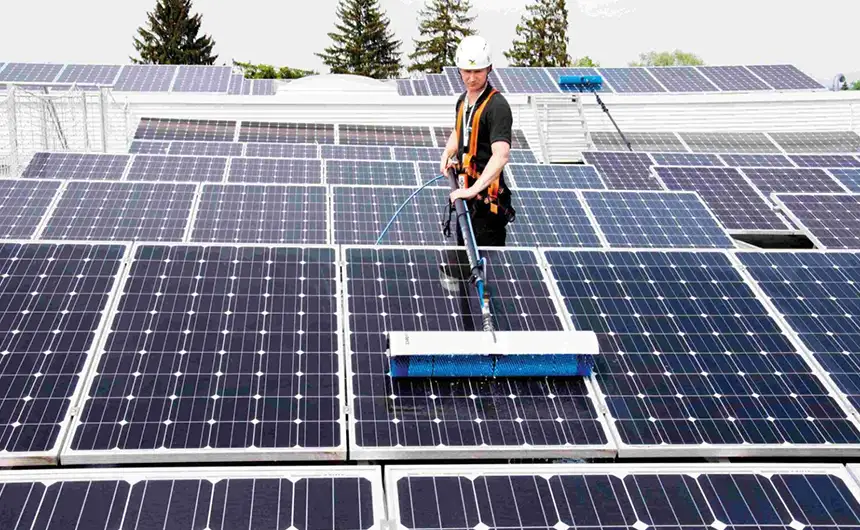
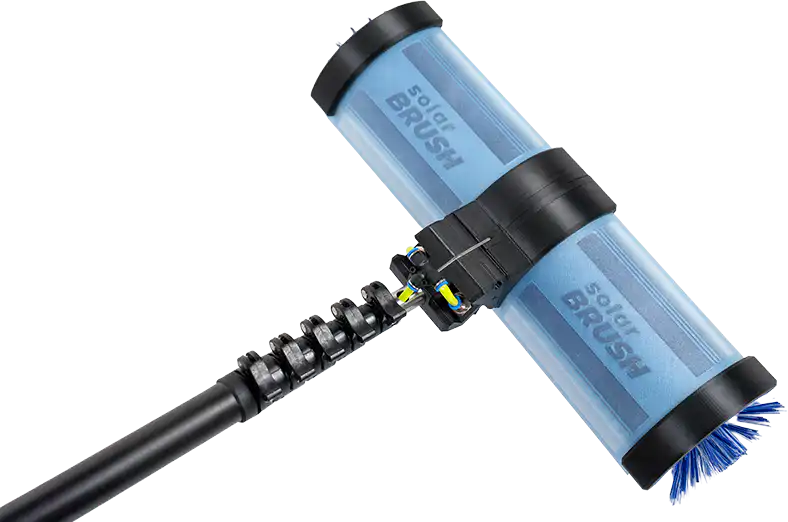
Manual cleaning with water and brush

For manual cleaning, water-fed telescopic poles with soft brushes are used. Demineralized water (osmosis water) is often used to avoid residue.

Benefits:

  • flexible to use
  • suitable for small to medium-sized systems
  • gentle cleaning when used correctly

Disadvantages:

  • time-consuming for large areas
  • dependent on accessibility

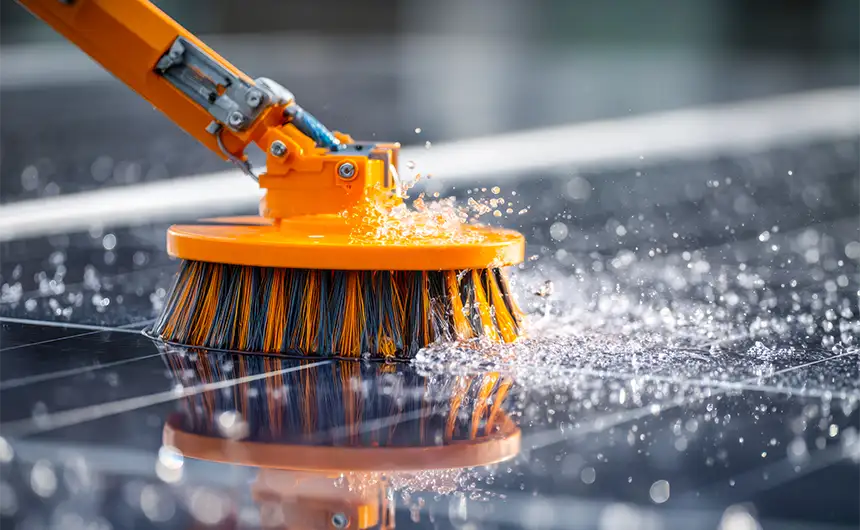
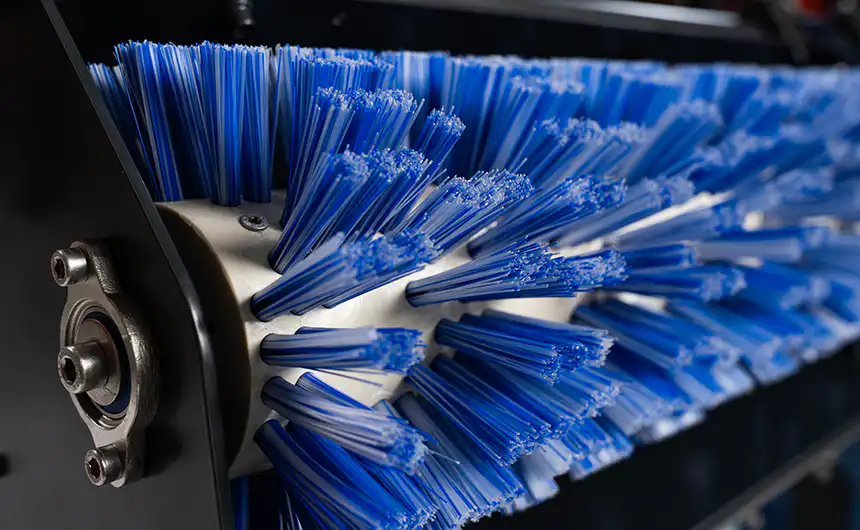
Machine-based cleaning / rotary brushes

Mechanical devices or machines are used here to speed up cleaning and efficiently cover larger areas.

Benefits:

  • higher area coverage
  • consistent cleaning results
  • efficient for larger systems

Disadvantages:

  • greater technical effort

  • not suitable for all roofs

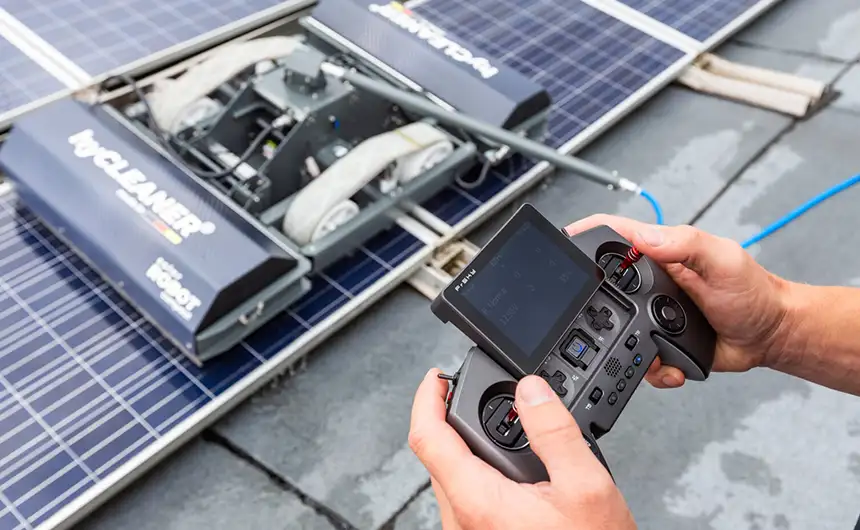
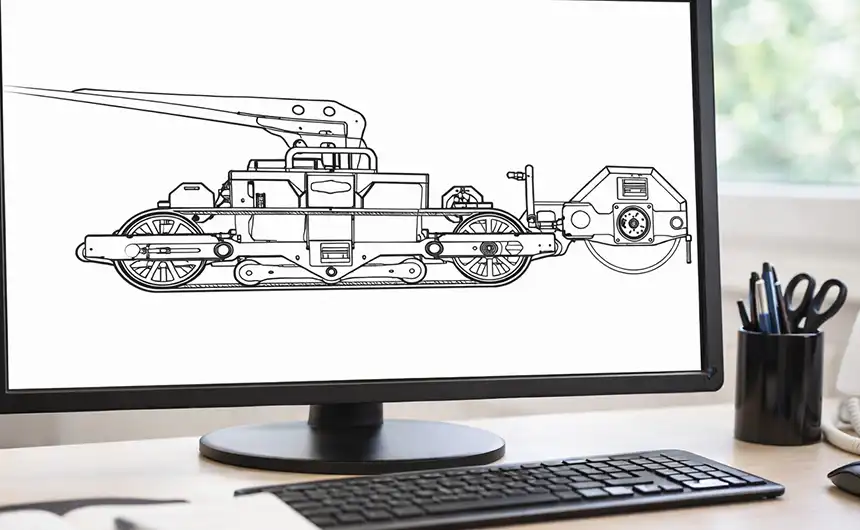
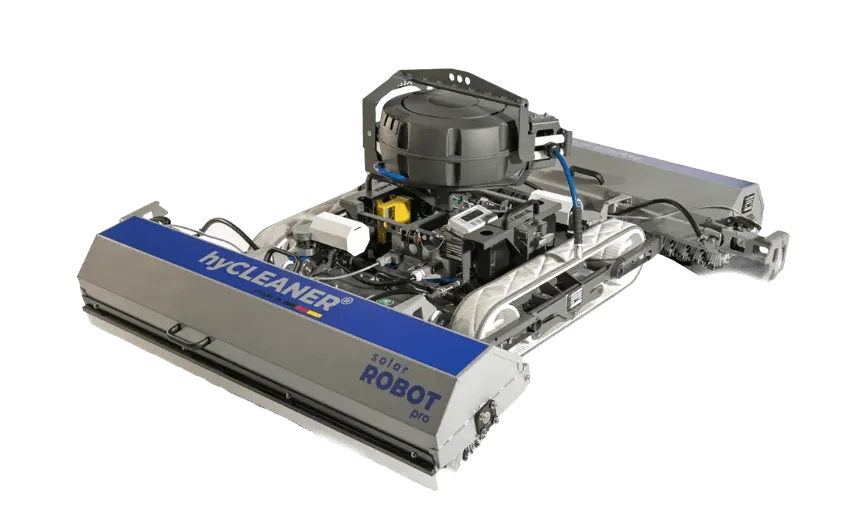
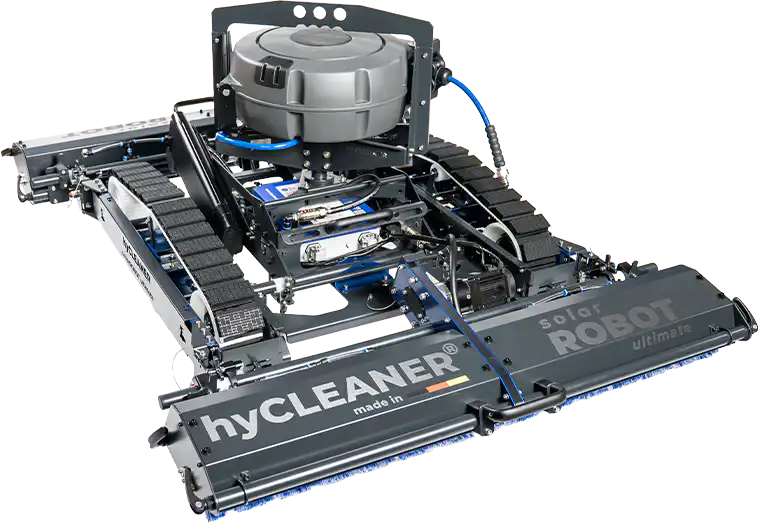
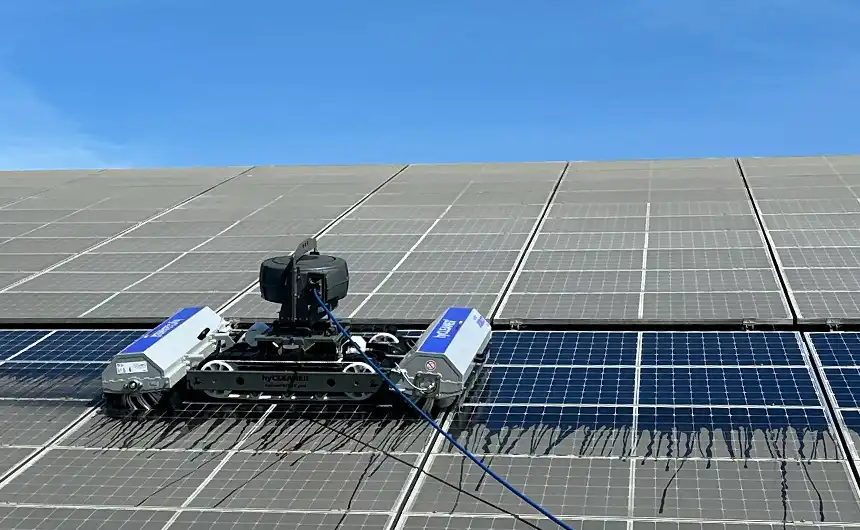
Cleaning robots for PV systems

Cleaning robots operate automatically and are particularly suitable for large, continuous areas such as commercial roofs or ground-mounted systems.

Benefits:

  • highly efficient for large systems
  • reduces manual effort
  • consistent cleaning results

Disadvantages:

  • higher investment costs

  • use depends on roof structure

Special methods and low-contact cleaning

In certain cases, special methods are used that work without direct mechanical contact or are particularly gentle.

Benefits:

  • minimized risk of damage
  • suitable for sensitive or hard-to-access systems

Disadvantages:

  • limited availability
  • dependent on the provider

Which cleaning method is the best?

The right method always depends on the system’s specific conditions:

  • Size of the PV system
  • Roof type and accessibility
  • Level of soiling
  • economic requirements

There is no one-size-fits-all solution – what matters is the right combination of method and application.

Conclusion: The right method secures yield and cost-effectiveness

Choosing the right PV cleaning method directly affects cleaning efficiency and therefore the system’s energy yield.
Those who tailor the method specifically to location, system size, and level of soiling achieve better results, reduce costs, and minimize risks.

For commercial, industrial, and agricultural systems, practical experience shows: For large areas, robot-assisted cleaning is usually the most efficient and cost-effective solution, while manual methods are primarily suitable for smaller or hard-to-access systems.

Which method is right in a specific case is closely linked to the cleaning interval – because more frequent cleanings require particularly efficient and scalable solutions.

→ How often should you clean a solar system?

At the same time, the following applies: Which method makes economic sense depends heavily on cleaning costs and the level of soiling.

What does PV cleaning cost, and when does it pay off?

Our recommendation: Have your system assessed individually. Factors such as location, sources of soiling, and system size are key in determining which cleaning method delivers the best long-term results. Sound advice helps you find the optimal strategy and avoid unnecessary costs.