Why is osmosis water ideal for PV systems? Find out how pure water gently cleans modules and reduces performance loss.



Startseite ❯ Solar-Fachartikel ❯ Expert Knowledge ❯ How Water Quality Affects Osmosis Cleaning
Water quality is one of the most important prerequisites for successful cleaning results with osmosis water. Only when lime, minerals, and other dissolved substances are sufficiently removed from the water can PV systems, glass surfaces, and facades be cleaned without residue. Water hardness and the so-called ppm value play a particularly crucial role. They determine how clean the purified water is and how effectively osmosis cleaning works.
Normal tap water contains various minerals, salts, and lime components. When evaporating, these substances remain on the cleaned surface. This creates fine residues to which new dirt can adhere more easily.
Professional cleaning therefore requires water that is as pure as possible. The fewer dissolved substances the water contains, the cleaner the surface dries. At the same time, cleaning intervals are extended because dirt reaccumulates less quickly.
For those who want to better understand the fundamentals of water treatment, the article on “Osmosis Cleaning in Industry” provides further information on how purified water and reverse osmosis work.
Water quality is measured in ppm. The abbreviation stands for “parts per million” and describes the amount of dissolved substances in water.
As a general rule: the lower the ppm value, the higher the water quality. A low value means that only a few minerals and salts remain in the water. This purified water is exactly what is needed for professional cleaning of PV systems, glass surfaces, and facades.
Different applications have different water quality requirements. The following guideline values are recommended for professional cleaning results:
These values ensure that the water dries almost without residue and leaves no visible lime or mineral deposits.
From our experience cleaning PV systems, glass facades, and industrial surfaces, we achieve the best results with purified water values below 20 ppm. Particularly with glass surfaces, even higher values can lead to visible drying residues.
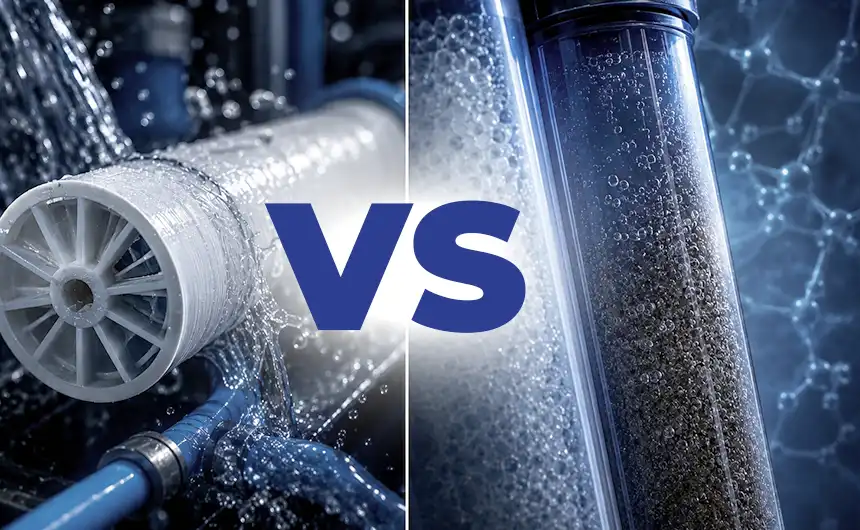
How different water treatment systems affect water quality and operating costs is shown in the comparison “Reverse Osmosis vs. Mixed Bed Resin”.
No lime spots on surfaces
Low ppm values prevent visible lime and mineral deposits after water dries.
Reduced re-soiling
Without residues, dust and dirt have significantly fewer adhesion points on the surface.
Consistent cleaning results
Purified water ensures streak-free cleaning and a clean appearance.
Gentle cleaning of sensitive surfaces
High water quality enables effective cleaning without aggressive chemicals.
Better light transmission for PV modules
Clean module surfaces support optimal utilization of incident sunlight.
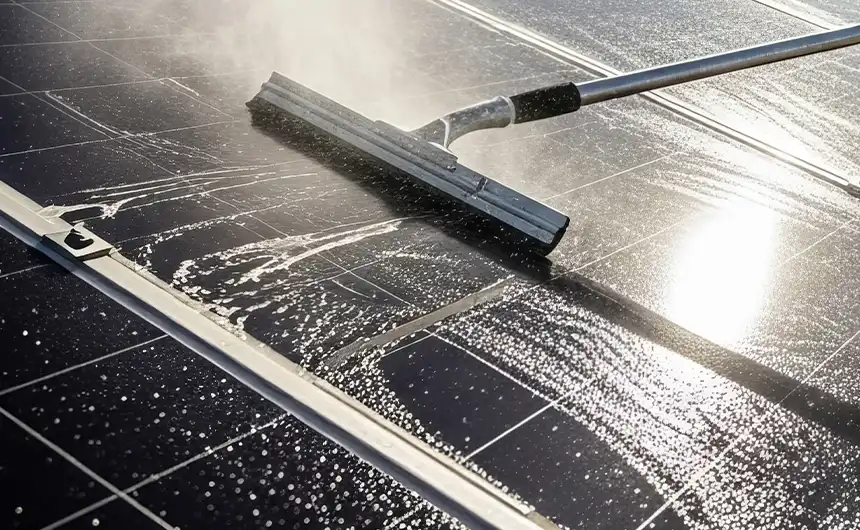
Water quality plays a particularly important role in cleaning solar modules. Why purified water is especially suitable for solar cleaning is explained in the article “Why Osmosis Water Is the Best Cleaning Solution for PV Systems”.
Water hardness varies considerably by region. In Germany, values range from approximately 70 ppm for soft water to around 500 ppm for very hard water.
The higher the water hardness, the more minerals and lime must be removed from the water. This increases the demands on water treatment, and the osmosis system settings must be adjusted accordingly.
Consideration of local water quality is therefore particularly important for professional cleaning systems.
In practice, water quality is monitored using a TDS meter or conductivity meter. These devices display the ppm value of the water and enable quick verification of purified water quality.
Before cleaning begins, both tap water and the osmosis water produced are often measured. This allows verification that the osmosis system is achieving the desired water quality.
Osmosis systems are designed for treating normal tap water. This provides controllable water quality and consistent baseline values for filter technology.
Well water or other natural water sources, on the other hand, often contain additional suspended solids and contaminants. These can burden filter systems more quickly and increase maintenance requirements.
For reliable and economical operation, using tap water as the source for purified water production is therefore recommended.
Water quality has a direct impact on osmosis cleaning results. Low ppm values ensure residue-free surfaces, less recontamination, and higher cleaning quality.
Those who want to professionally clean PV systems, glass surfaces, or facades should pay attention not only to cleaning technology but also to the quality of the water used. Only the combination of appropriate water treatment and modern cleaning technology enables optimal results.
Further information on available water systems for professional cleaning can be found on our Add-Ons page.
Whether it’s an agricultural rooftop system, a commercial roof or a large solar park—the economically optimal cleaning solution depends on system size, location and degree of soiling. Together, we analyze your system and recommend the right cleaning concept.
Our cleaning solutions at a glance
solarROBOT compact
For agricultural as well as small and medium rooftop systems up to approx. 200 kWp. The cleaning robot can be used independently by the system operator and is supplied including a charging station. CE-certified and developed specifically for cost-effective in-house operation.
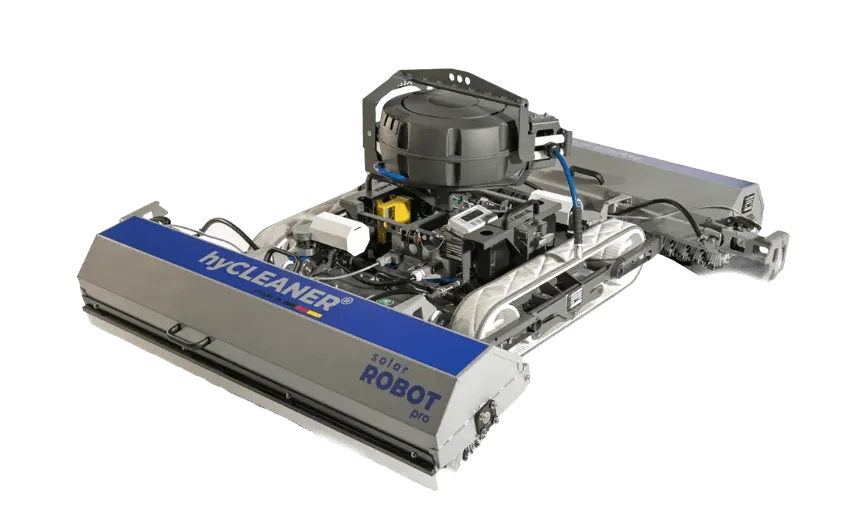
solarROBOT pro
For medium-sized commercial and ground-mounted systems. With a working width of up to 2 meters and semi-automated operation, the solarROBOT Pro is ideal for efficient cleaning of larger module areas.
solarROBOT ultimate
For large-scale systems and ground-mounted projects. With a working width of 2.4 meters, maintenance-free chain drive and high area performance, the solarROBOT Ultimate was developed for professional use on large PV systems.
solarBRUSH 600
The handheld cleaning solution for special constructions, complex roof geometries and professional cleaning service providers. Ideal for applications where cleaning robots cannot be used due to the design.

For agricultural as well as small and medium rooftop systems up to approx. 200 kWp. The cleaning robot can be used independently by the system operator and is supplied including a charging station. CE-certified and developed specifically for cost-effective in-house operation.
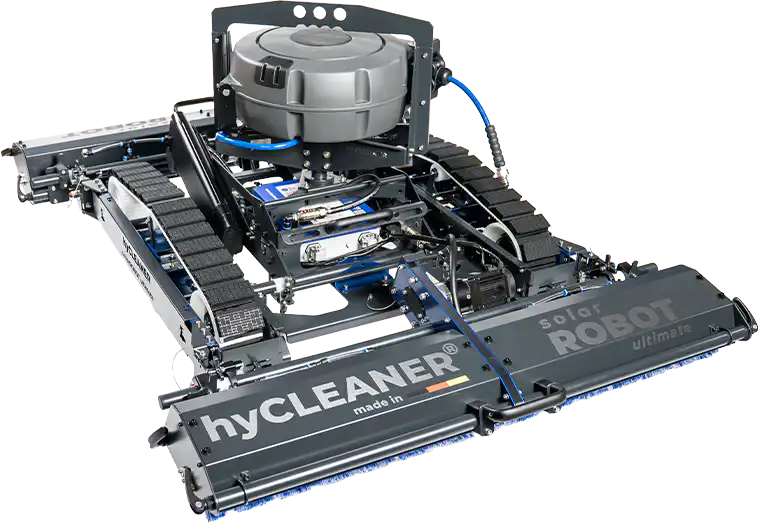
For large-scale systems and ground-mounted projects. With a working width of 2.4 meters, maintenance-free chain drive and high area performance, the solarROBOT Ultimate was developed for professional use on large PV systems.
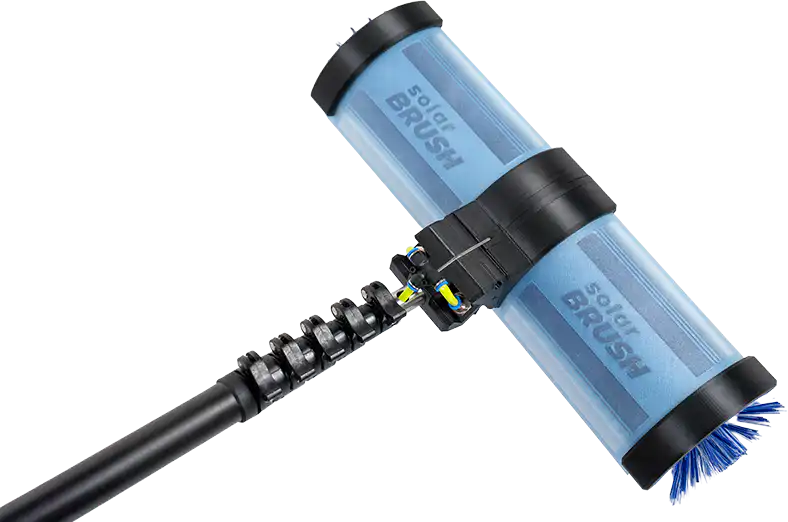
The handheld cleaning solution for special constructions, complex roof geometries and professional cleaning service providers. Ideal for applications where cleaning robots cannot be used due to the design.
All systems clean without chemicals or soap using pure water and enable gentle, material-friendly cleaning of PV systems.
We analyze your system portfolio, calculate your individual cleaning needs and recommend the economically optimal cleaning concept—from a single system to a multi-site park.
ppm describes the amount of dissolved substances in water. The lower the value, the purer the water and the better it is suited for professional cleaning.
For cleaning PV systems, a value below 30 ppm is recommended. This allows the water to dry almost without residue.
For cleaning PV systems and facades, a value below 30 ppm is generally recommended. For glass surfaces, values below 15 ppm are considered ideal.
Tap water contains lime, minerals, and salts. These remain on the surface when evaporating and can promote recontamination.
Well water often contains additional suspended solids and contaminants that can burden or clog filter systems more quickly.
The higher the water hardness, the more minerals and lime must be removed from the water. This increases the demands on water treatment.
Calculate your individual yield loss with the hyCLEANER solar loss calculator.
We recommend the economically right cleaning concept for your system.
Why is osmosis water ideal for PV systems? Find out how pure water gently cleans modules and reduces performance loss.
Reverse osmosis or mixed bed resin? Find out which pure water system is more economical in the long term for PV and facade cleaning.
Osmosis Cleaning in Industry – how do cleaning companies and businesses benefit from it? Learn why this technology ensures efficient, residue-free results and saves costs.