


Maintenance of PV Systems: Why Cleaning Is Also Crucial for Yield and Profitability
Interview with Photovoltaic Expert Pascal Kierstein
- Nicht kategorisiert
- Jana Forgó
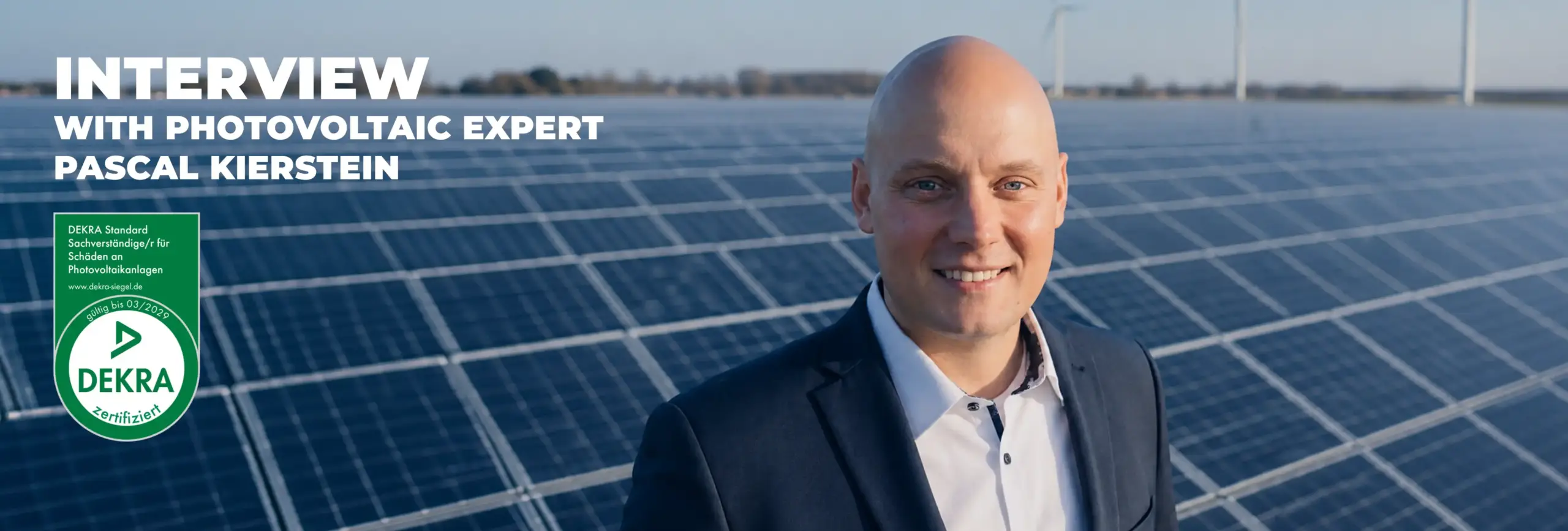
Photovoltaic systems are considered durable and low-maintenance. Nevertheless, even modern PV systems require regular maintenance and upkeep to operate economically, safely, and reliably over the long term. One factor that has a direct impact on energy yield is particularly underestimated: module contamination.
For our hyCLEANER expert blog, we spoke with Pascal Kierstein, certified photovoltaic expert of the German Solar Association, about typical practical errors, the economic significance of cleaning, and current developments in PV system maintenance.
Key Points
- Regular maintenance is crucial for the profitability and operational safety of PV systems.
- Module contamination directly leads to measurable performance losses.
- From an expert perspective, professional cleaning is an integral part of PV system maintenance.
- Operators of commercial PV systems bear responsibility for the proper condition and operational safety of their system.
- Modern maintenance concepts increasingly rely on data-based monitoring and predictive maintenance.
- Many yield losses and technical problems can be prevented early through regular maintenance.
Significance and Fundamentals of PV Maintenance
How important is regular maintenance of PV systems?
Pascal Kierstein: Maintenance is a central factor for the profitability of a system. Without regular care, wear and performance losses inevitably occur. This also applies in electrical engineering: a system is only as good as its maintenance condition.
A photovoltaic system can only operate efficiently over the long term if it is professionally inspected and maintained.
Which maintenance measures are most frequently neglected in practice?
Pascal Kierstein: In practice, visual inspections, measurement-based checks, and regular cleaning of generator surfaces are frequently neglected. In solar systems, “generator surface” refers to the entire active area of the installed solar modules—that is, the area that actually converts sunlight into electrical energy.
The impact of contamination on system performance is significantly underestimated by many operators: even partially contaminated generator surfaces can lead to considerable performance losses and thus significantly impair the profitability of the system.
Particularly with commercial systems, it is noticeable that maintenance only becomes an issue once visible yield losses or technical problems have already occurred.
Contamination and Its Economic Consequences
Why does contamination have a direct impact on energy yield?
Pascal Kierstein: Contamination of PV modules has a direct impact on energy yield because the module represents the primary energy source of the system.
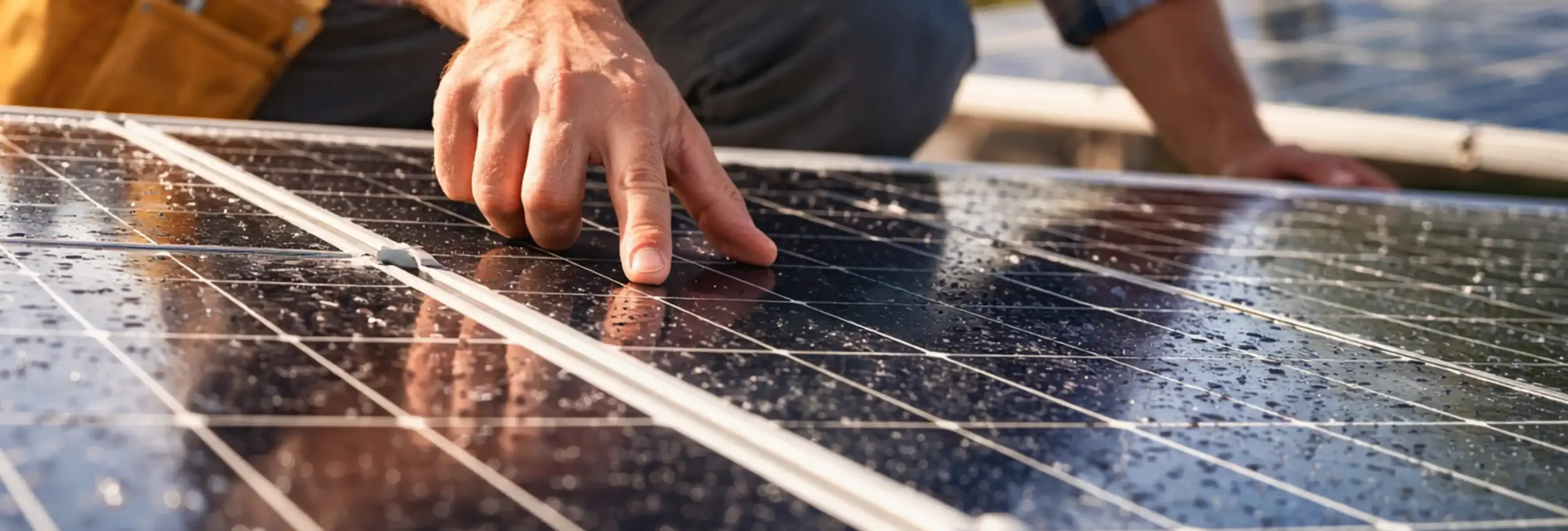
Any form of deposit on the module surface reduces irradiation and consequently leads to reduced yields. From a technical perspective, the relationship is clear: The higher the degree of contamination, the lower the achievable performance.
To illustrate this, it can be compared to dirty glasses—even minor impurities significantly impair vision. Applied to PV modules, this means that even light contamination can measurably reduce energy conversion.
Further Technical Article
Solar Panel Cleaning: How Often Is It Really Necessary?
How often cleaning is actually worthwhile depends heavily on location, environmental conditions, and system type. In this article, you will learn which cleaning intervals have proven effective in practice.
At what point does contamination become economically relevant?
Pascal Kierstein: The economic relevance of contamination is highly location-dependent and cannot be defined across the board using fixed threshold values.
In practice, however, it is evident that systems in exposed locations—for example, on agricultural operations, in industrial environments, or near forests—become contaminated significantly faster and more heavily and consequently require more frequent cleaning.
Additionally, location-specific global irradiation must be considered: in regions with high irradiation, contamination has a more immediate and stronger impact on energy yield and thus on profitability.
Therefore, a site-specific assessment considering environmental conditions and yield data is always essential.
How economically viable are cleaning measures really?
Pascal Kierstein: The return on investment of cleaning measures is often more quantifiable in practice than for other maintenance components, as the impact on energy yield is directly measurable.
Regardless, both cleaning measures and other maintenance work are essential for the long-term operational safety and longevity of the system.
While cleaning primarily optimizes current yield, other maintenance measures serve particularly to prevent damage and sustainably preserve the value of the system.
Especially with larger commercial systems, even small percentage performance losses can have significant economic impacts.
Further Technical Article
How much does PV cleaning cost – and when does it truly pay off?
Which factors influence costs and when professional cleaning is economically worthwhile is explained in detail in our article on PV cleaning costs.
Cleaning as an Integral Part of Maintenance
Pascal Kierstein: Yes, maintenance without regular cleaning must be considered incomplete from a technical perspective.
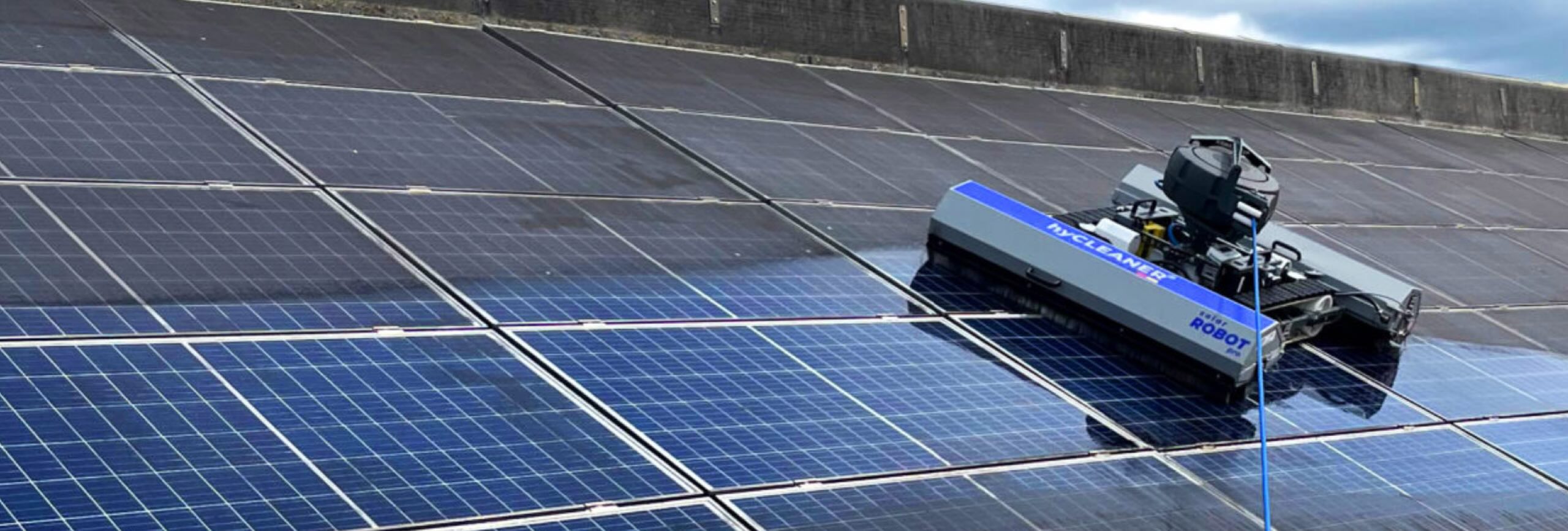
Cleaning is an integral part of maintenance, as both operationally relevant components—for example, inverter fans—and generator surfaces are directly affected.
Contamination can impair cooling and lead to thermal stress, while contaminated modules directly reduce energy yield.
Thus, cleaning affects both operational safety and system performance and is therefore a mandatory component of proper maintenance.
Modern Maintenance Concepts and Recommendations
Which developments are currently changing PV maintenance?
Pascal Kierstein: Currently, in the field of PV system maintenance and upkeep, there is a clear trend toward digitalization, automation, and data-based maintenance.
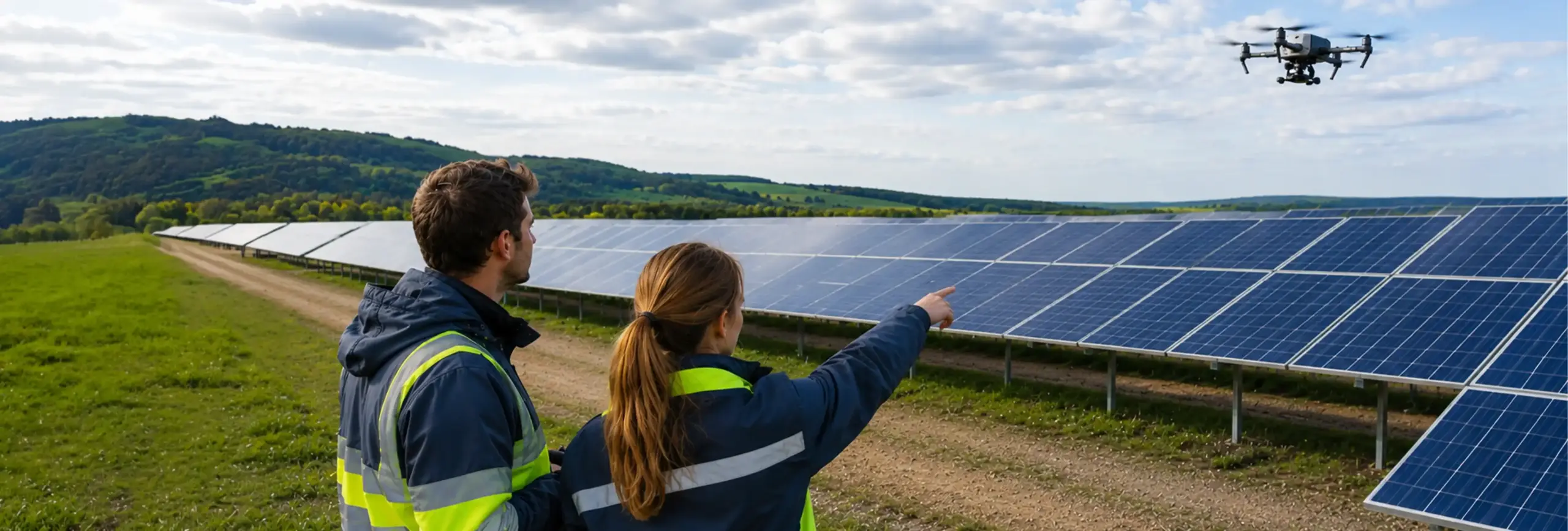
A key development focus is on so-called predictive maintenance: through the use of AI and data analysis, operational data is continuously evaluated to detect faults early and prevent unplanned outages.
In parallel, drone-based and image-based inspection methods are gaining increasing importance.
From reactive to proactive and data-driven strategy?
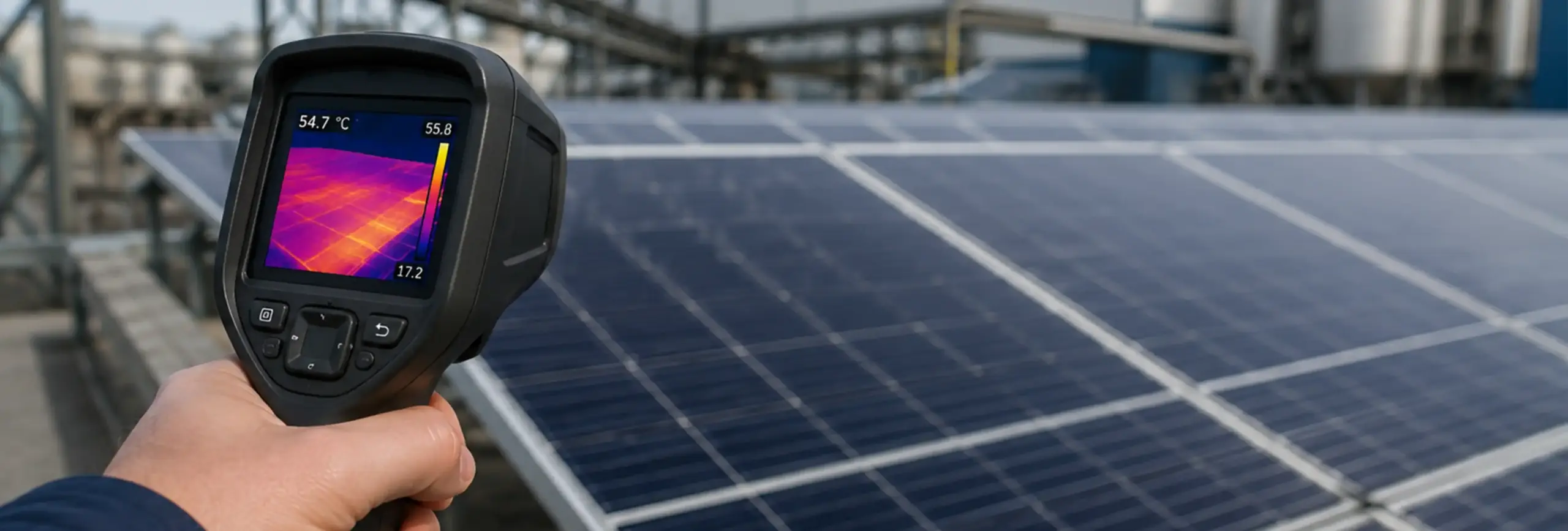
Using thermography and AI-supported analysis, defects, contamination, or hotspots can be identified quickly and across large areas—significantly more efficiently than traditional manual inspections. Furthermore, the market is developing toward automated and integrated O&M concepts: remote monitoring, real-time data analysis, and semi-autonomous cleaning systems enable condition-based maintenance instead of rigid maintenance intervals.
In summary, maintenance is increasingly shifting from a reactive to a proactive and data-driven strategy with the goal of maximizing yields and sustainably reducing operating costs.
What recommendations does an expert give to operators?
Pascal Kierstein: Operators should rely on a structured maintenance and monitoring concept, consisting of regular visual inspections, measurements, and needs-based cleaning.
It is crucial to detect and remedy deviations early.
Only through condition-based maintenance and continuous evaluation of yield data can the profitability of the system be secured over the long term.
Which other aspects are important in maintenance?
Pascal Kierstein: In addition to traditional visual inspections, measurements, and cleaning measures, electrical safety and documentation are of central importance.
This includes regular testing of protective measures, grounding, insulation resistance, and inspection of all DC and AC connections.
Equally important is seamless monitoring with plausible yield control to detect deviations early.
Which other aspects are important in maintenance?
Conclusion: Maintenance Without Cleaning Is Not Complete Upkeep
The interview with Pascal Kierstein clearly shows: maintenance of a PV system is not only relevant for profitability but also belongs to the central operator obligations of a commercial system. Maintenance means far more than an occasional visual inspection.
Regular cleaning in particular plays a crucial role for:
- the profitability of the system
- long-term performance
- operational safety
- prevention of consequential damage
Especially with commercial photovoltaic systems, even minor performance losses can have significant economic impacts.
Modern maintenance concepts therefore increasingly rely on data-based monitoring, automated processes, and professional cleaning solutions.
hyCLEANER supports operators of commercial PV systems with professional cleaning solutions that sustainably improve yield, operational safety, and long-term profitability. With our Solar Loss Calculator, operators can quickly and easily assess the potential yield deficit of their system.
About the Interview Partner
Pascal Kierstein assists companies and system operators with technical assessment, analysis, and evaluation of photovoltaic systems. His areas of activity include damage reports, cause analyses, assessment of yield losses, and technical evaluation of maintenance and upkeep measures.
He is a certified photovoltaic expert of the German Solar Association (BSW) and a VdS-recognized expert for photovoltaic systems. In his daily practice, he supports companies in assessing system conditions, damage, and technical anomalies.
Further information: kierstein.info
FAQ: Maintenance and Cleaning of PV Systems
How often should a PV system be maintained?
A PV system should be inspected regularly to detect performance losses, technical defects, and safety risks early. From an expert perspective, at least one annual visual and functional inspection is recommended. Additionally, yield data should be continuously monitored and the system cleaned as needed. For commercial systems, an individual maintenance concept may be advisable.
How strongly does contamination affect the yield of a PV system?
Contamination can significantly reduce the energy yield of a PV system. How much performance decreases depends on factors including location, environmental influences, and degree of contamination. Systems on agricultural operations, in industrial areas, or near forests are particularly affected. Even light deposits can reduce solar irradiation on the modules and thus lead to reduced yields.
What does maintenance of a PV system cost?
The costs for maintenance of a PV system depend on factors such as system size, accessibility, location, and scope of inspections. Typical maintenance measures include visual inspections, electrical measurements, monitoring, and, if necessary, module cleaning. For commercial systems, individual consideration is recommended, as even minor performance losses can have significant economic impacts.
Is maintenance of a PV system mandatory?
Commercial operators of PV systems bear responsibility for the operational safety and proper condition of their system. Regular maintenance helps detect risks, technical damage, and performance losses early. For private operators as well, regular inspection is advisable to avoid yield losses and preserve the system’s lifespan over the long term.